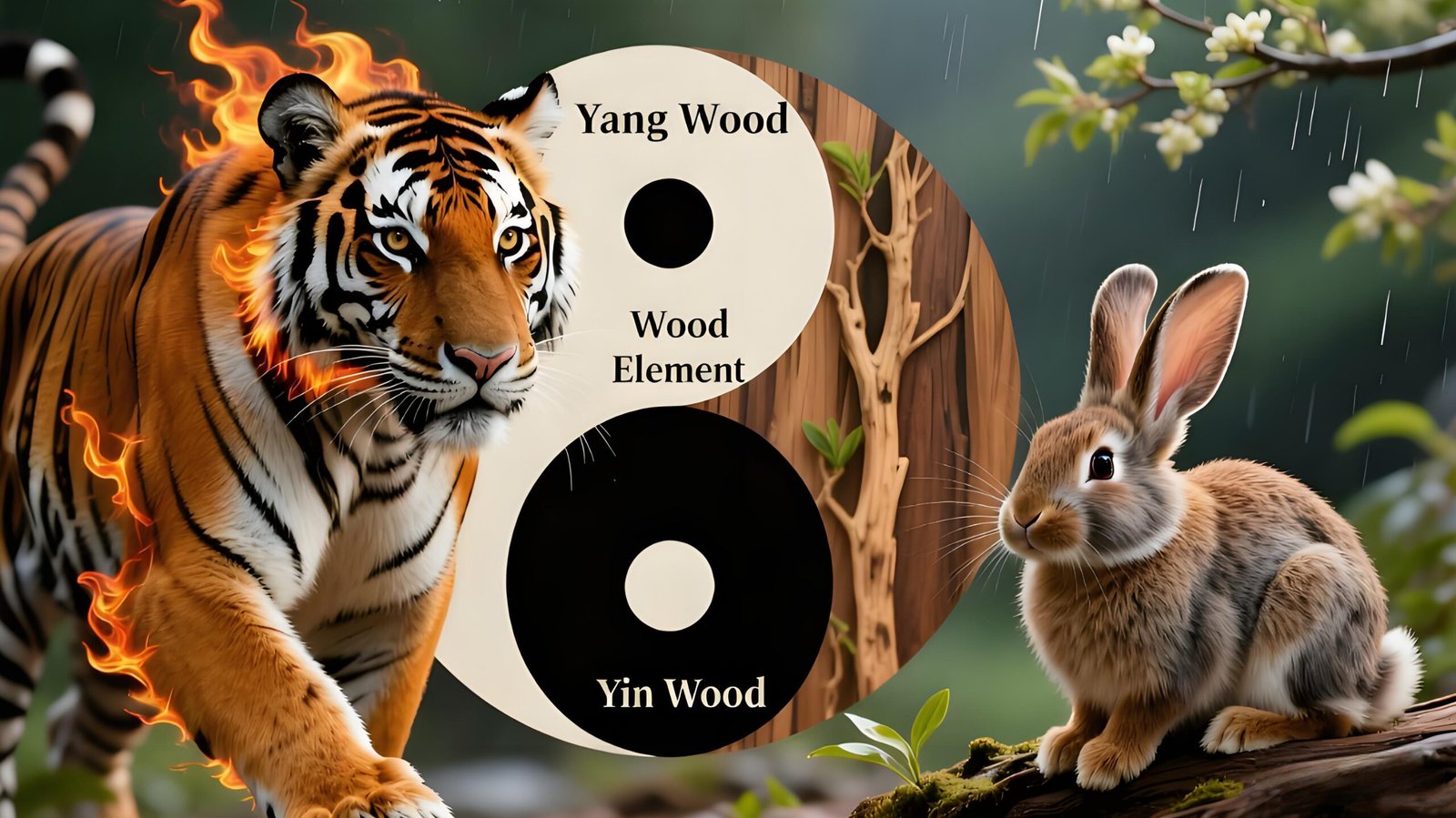
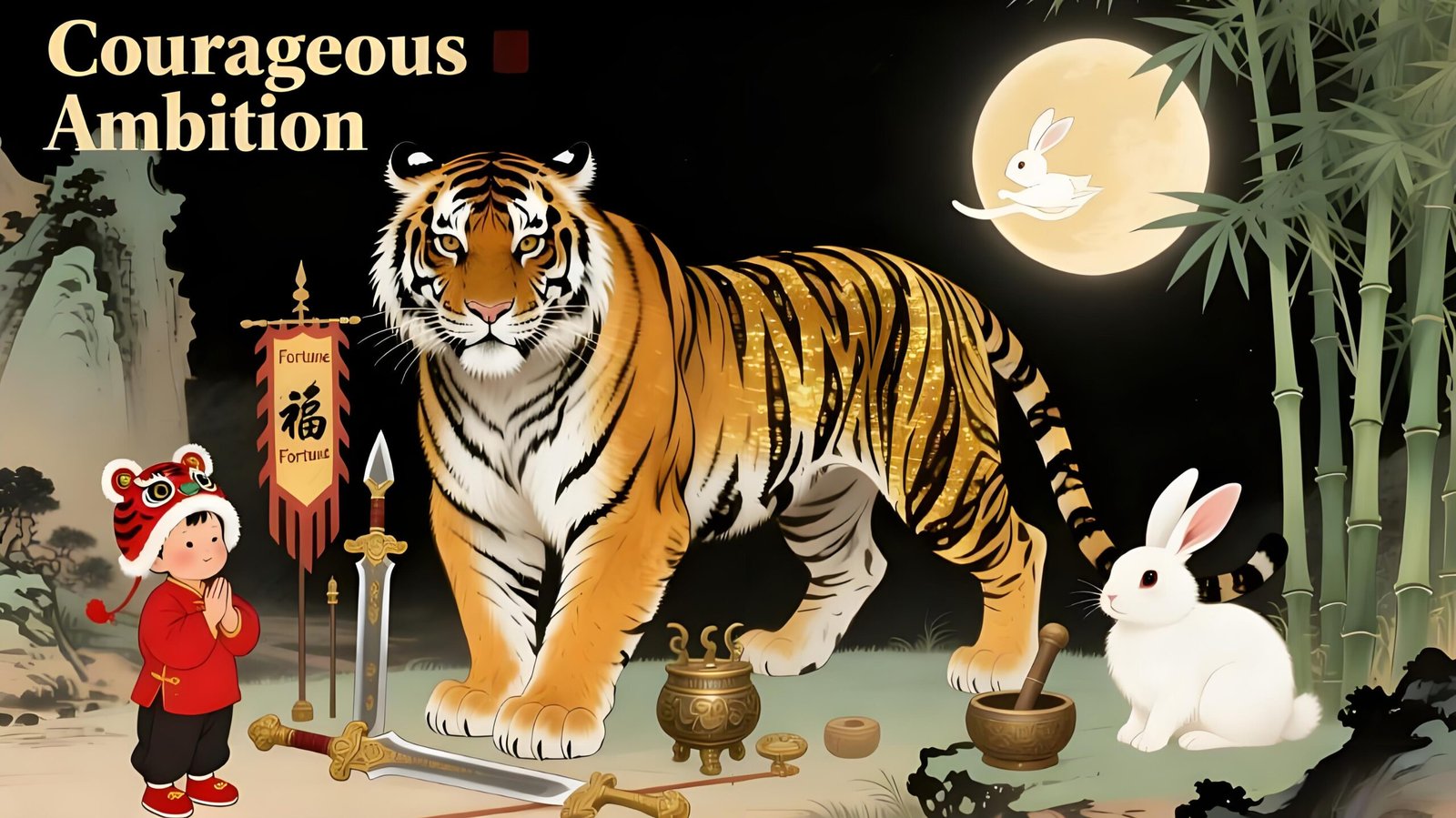
In the Yin-Yang and Five Elements system of the Twelve Chinese Zodiac Signs, the Tiger represents “Yang Wood”, symbolizing vigorous vitality. It is as full of explosive power as withered wood coming back to life in spring, corresponding to a personality that is mostly brave and resolute, and acts in a decisive and vigorous manner. The strong characteristics of “Yang Wood” in the Five Elements often make people born in the Year of the Tiger show leadership and pioneering spirit.
2.Character
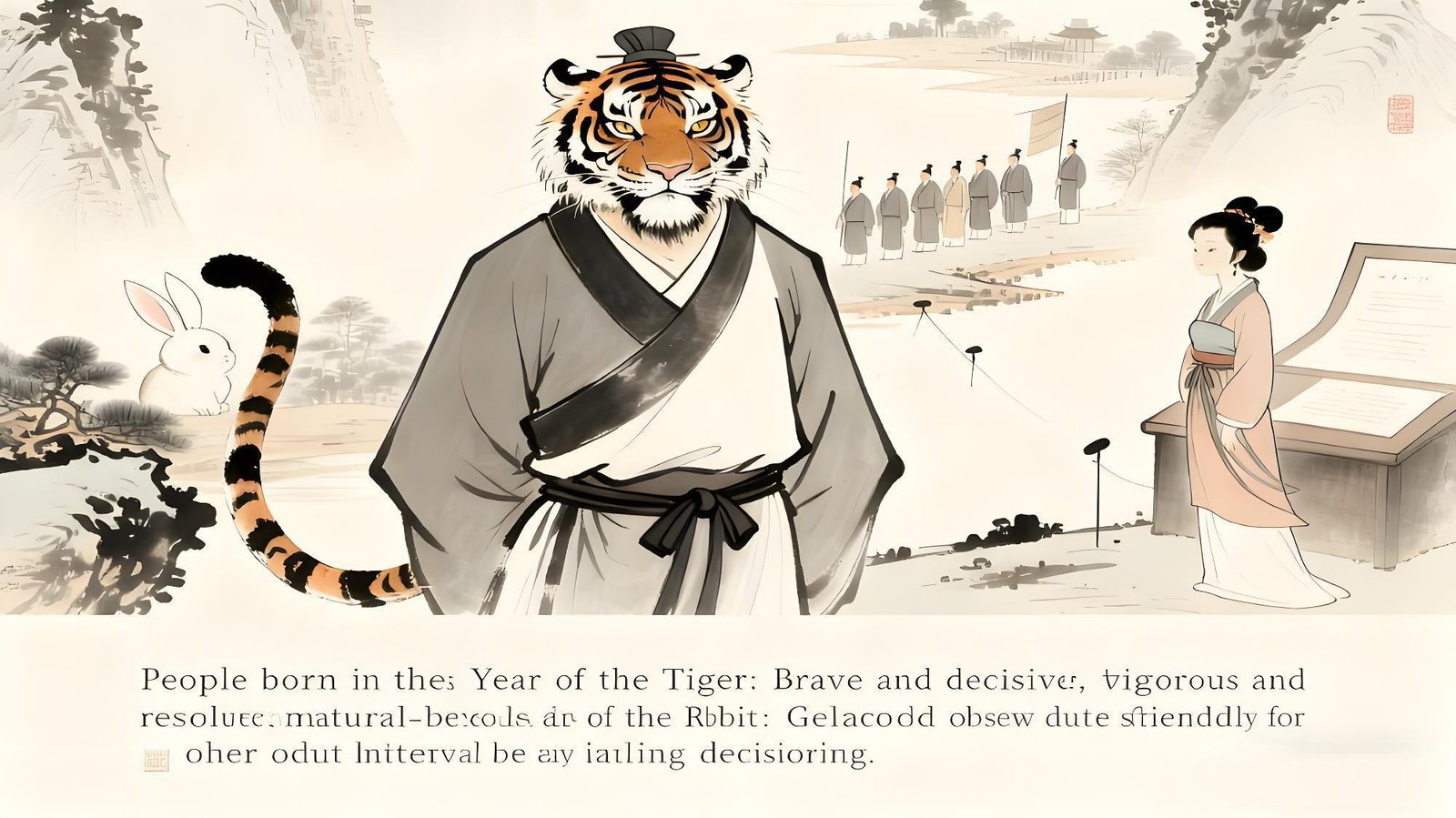
People born in the Year of the Tiger have a natural aura. They are brave and resolute, never backing down in the face of challenges. They possess strong leadership and executive abilities, act with great promptness and determination, and are always willing to take the lead in opening up new horizons. However, their impulsive nature can sometimes make them overlook details, and they may appear stubborn on occasion.
People born in the Year of the Tiger have a natural aura. They are brave and resolute, never backing down in the face of challenges. They possess strong leadership and executive abilities, act with great promptness and determination, and are always willing to take the lead in opening up new horizons. However, their impulsive nature can sometimes make them overlook details, and they may appear stubborn on occasion.
3.Marriage
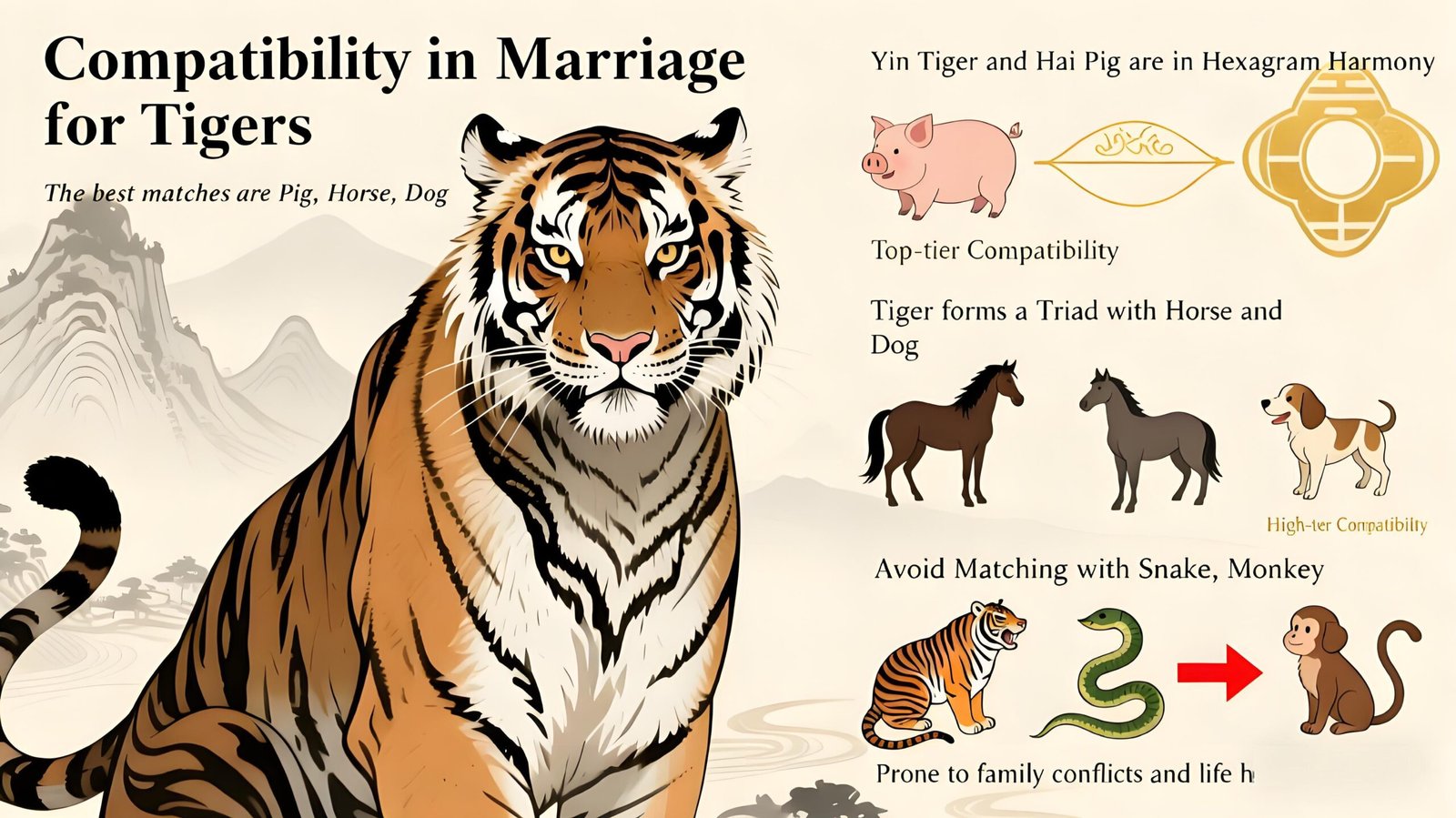
Marriage Compatibility for Tiger: The best marital matches are Pig, Horse, and Dog. The Tiger (Yin) and Pig (Hai) form a “Liuhe” (six combinations) relationship, which is a top-tier marriage match. The Pig’s gentleness and tolerance can balance the Tiger’s dominance, filling the family with warmth. The Tiger, Horse, and Dog form a “Sanhe” (triple combination) relationship, which is a high-tier marriage match. Both the Tiger and Horse are aggressive and can pursue goals hand in hand; with the Dog, they can maintain long-term sweetness due to mutual respect and trust. Tiger is not suitable to marry Snake or Monkey. There are harmful and conflicting relationships between Tiger (Yin) and Snake (Si), as well as between Tiger (Yin) and Monkey (Shen), which easily trigger family conflicts and lead to a life full of ups and downs.
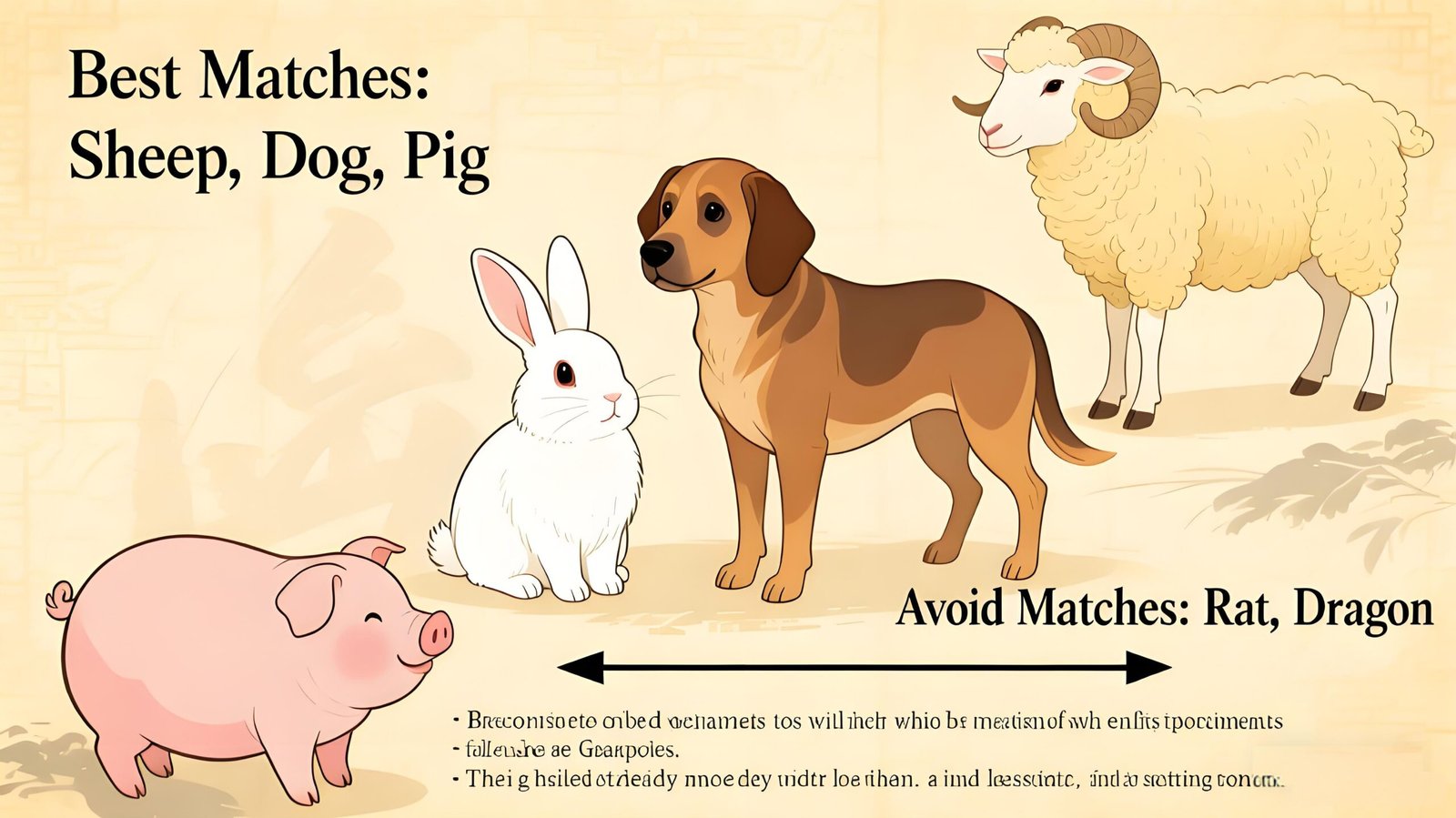
Marriage Compatibility for Rabbit: The best marital matches are Goat, Dog, and Pig. The Rabbit (Mao) and Dog (Xu) form a “Liuhe” relationship, which is a top-tier marriage match. The Dog’s loyalty and reliability can give the sensitive Rabbit a strong sense of security. The Rabbit, Goat, and Pig form a “Sanhe” relationship, which is a high-tier marriage match. The Rabbit and Goat have similar personalities, both gentle and delicate, and can build a warm family together. With the Pig, due to complementary personalities, the Rabbit’s intelligence paired with the Pig’s simplicity is regarded as a “blessing combination”. Rabbit is not suitable to marry Rat or Dragon. There are punitive and harmful relationships between Rat (Zi) and Rabbit (Mao), as well as between Dragon (Chen) and Rabbit (Mao). Such pairings easily lead to constant frictions between the two parties and unstable relationships.
4.Feng Shui
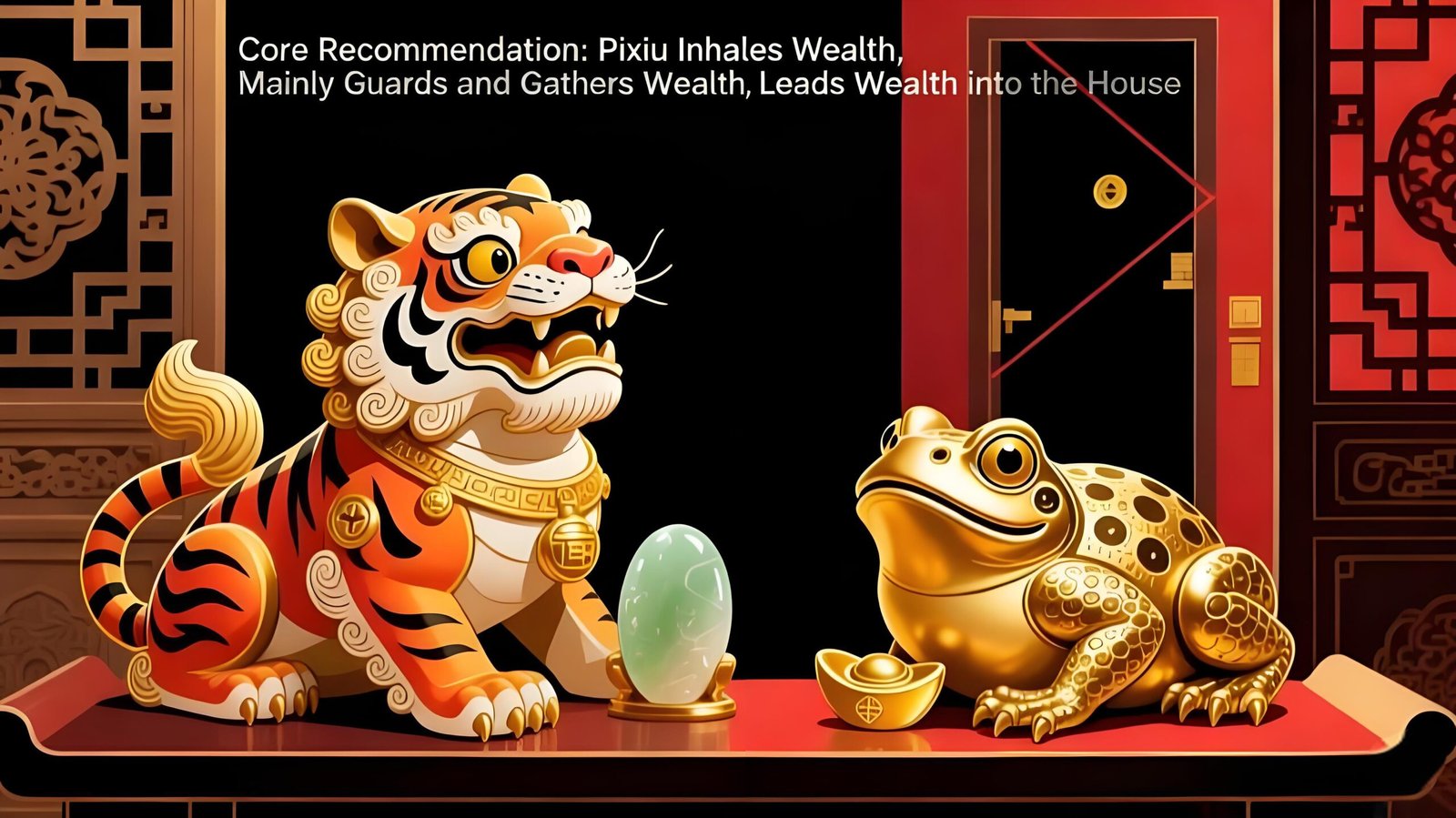
For People Born in the Year of the Tiger**: The core wealth-attracting mascots are Pixiu (a mythical creature) and Golden Toad. Pixiu symbolizes drawing wealth from all directions and should be placed in the study or on the office desk, with its head facing the window or door to create a “guiding wealth into the house” pattern. The Golden Toad is for “guarding and accumulating wealth” and must be placed in the obvious wealth position of the office (the diagonal corner from the entrance) or the living room hallway, with its head facing the interior of the room, implying retaining wealth. Both are recommended to be made of copper or jade to enhance Feng Shui energy.
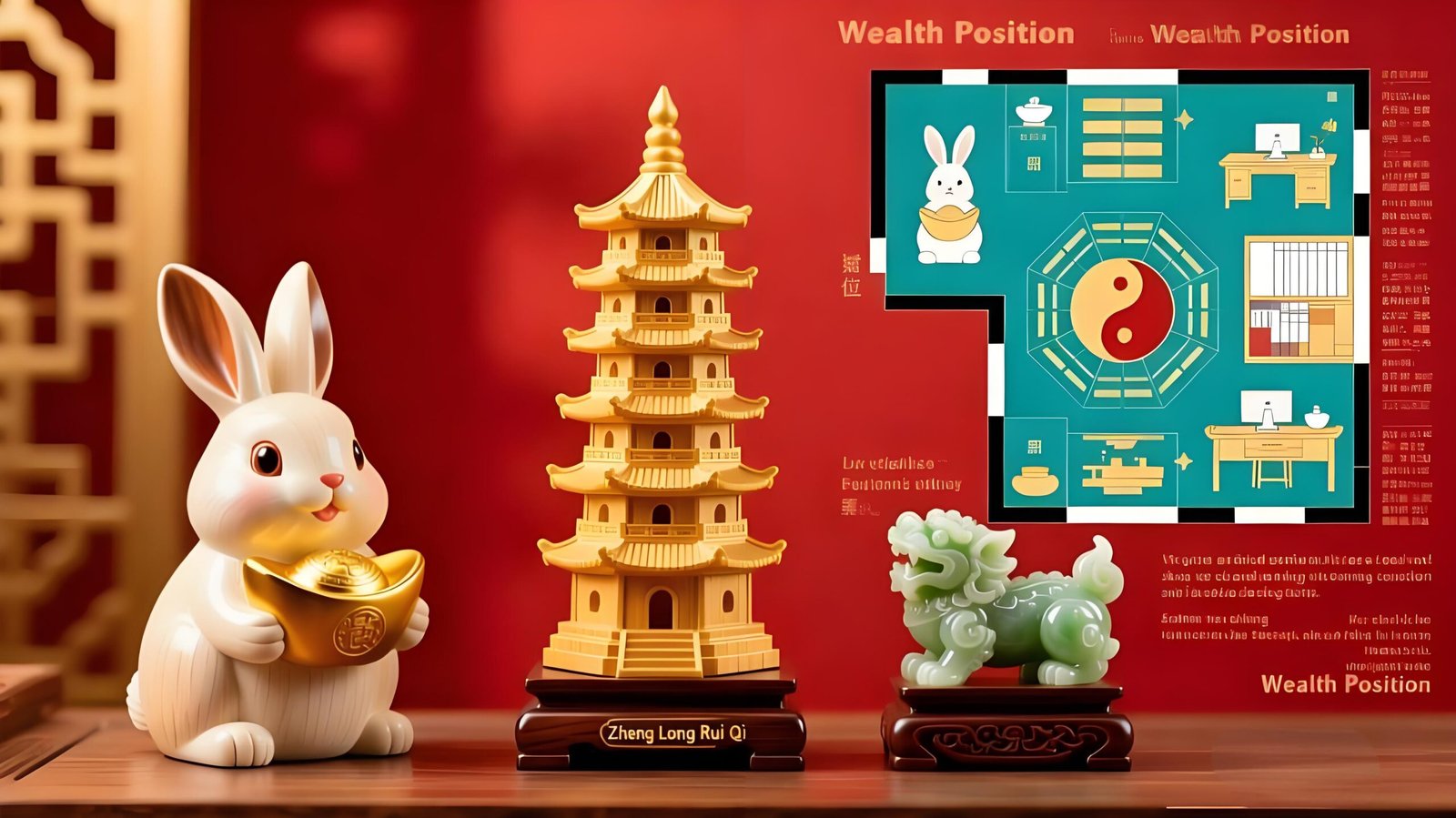
For People Born in the Year of the Rabbit**: The top choices are rabbit-shaped ornaments (such as rabbits holding gold ingots) and Wenchang Pagodas. Rabbit-shaped ornaments match the zodiac’s energy field and should be placed in the east or southeast of the residence (the native direction of the Rabbit), preferably made of wood or ceramics to strengthen wealth luck. Wenchang Pagodas are for career promotion and noble people’s luck; they need to be placed in the Wenchang position (southeast) of the study or office desk to facilitate steady career development. In addition, a jade Pixiu placed in a prominent position in the living room, with its head facing outward, can also help attract wealth.
5.Culture
In the cultural system of the Twelve Chinese Zodiac Signs, although the Tiger and the Rabbit are adjacent in sequence, they embody distinctly different cultural symbols and profound spiritual connotations.
Known as the “King of Beasts”, the Tiger is the embodiment of strength, majesty and courage. In ancient times, emperors decorated weapons and flags with tiger patterns, using its intimidating power to strengthen their ruling authority; among the people, the Tiger was regarded as a mythical beast that guards homes and wards off evil. Children wear tiger-head hats and shoes, carrying the wish of resisting disasters. Its deep-seated meaning points to “masculine vitality”, representing the spiritual core of facing challenges directly and upholding justice. For example, the phrase “tiger-like courage and ambition” highlights the character of fearlessness.
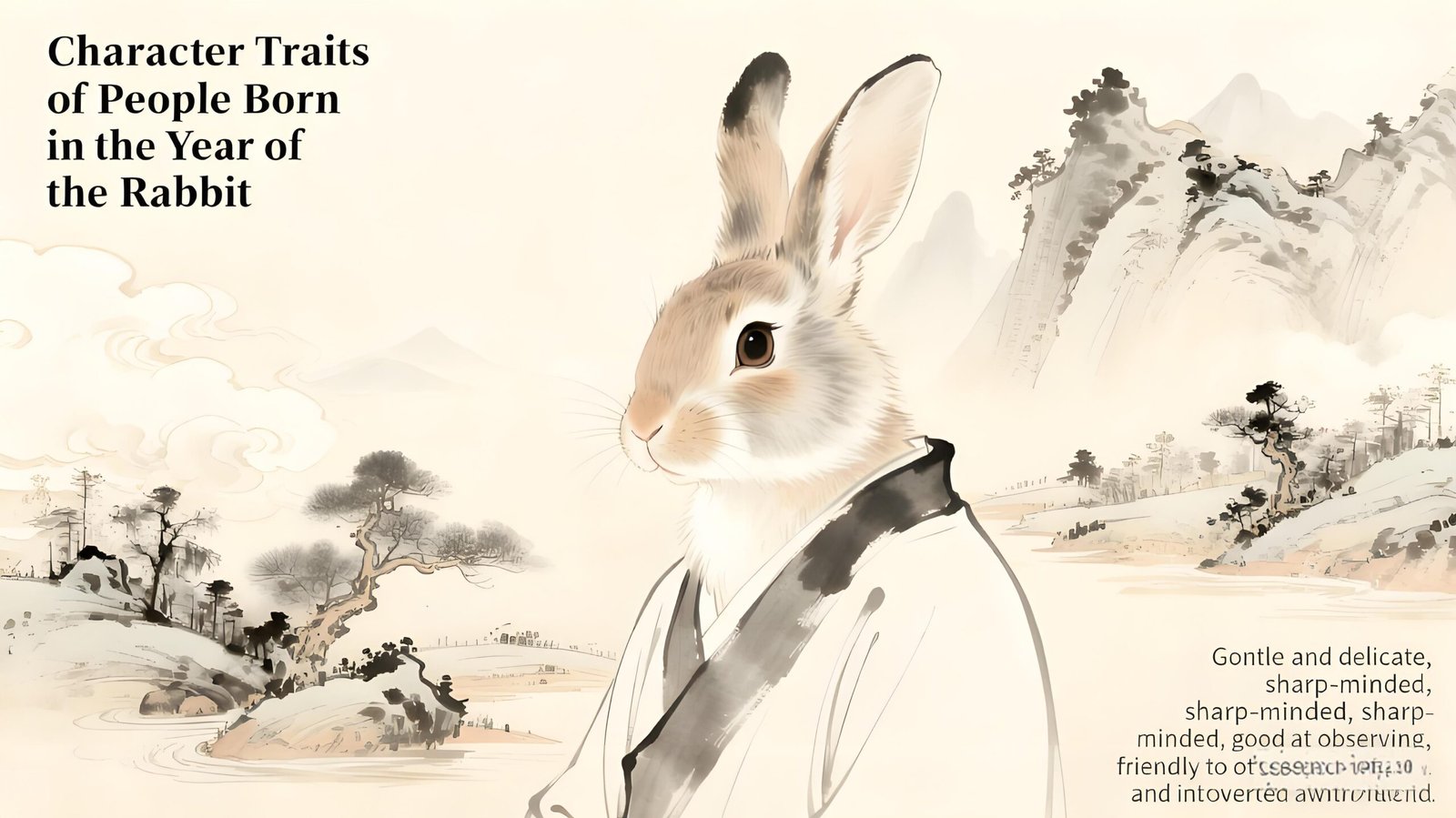
The Rabbit, on the other hand, takes gentleness, wisdom and auspiciousness as its core symbols. Due to its strong reproductive capacity, it is endowed with the beautiful expectation of “prosperity with many children”; the legend of the Jade Rabbit pounding medicine in the moon further links it closely with longevity and reunion, making it an important carrier of Mid-Autumn Festival culture. Its profound implication contains “feminine wisdom”, symbolizing resolving conflicts with peace and avoiding risks with alertness.
One representing rigidity and the other softness, one standing for courage and the other wisdom, the two together carry the philosophical thought of “yin-yang balance” in traditional culture, and also reflect the Chinese people’s acceptance and admiration for diverse personalities.