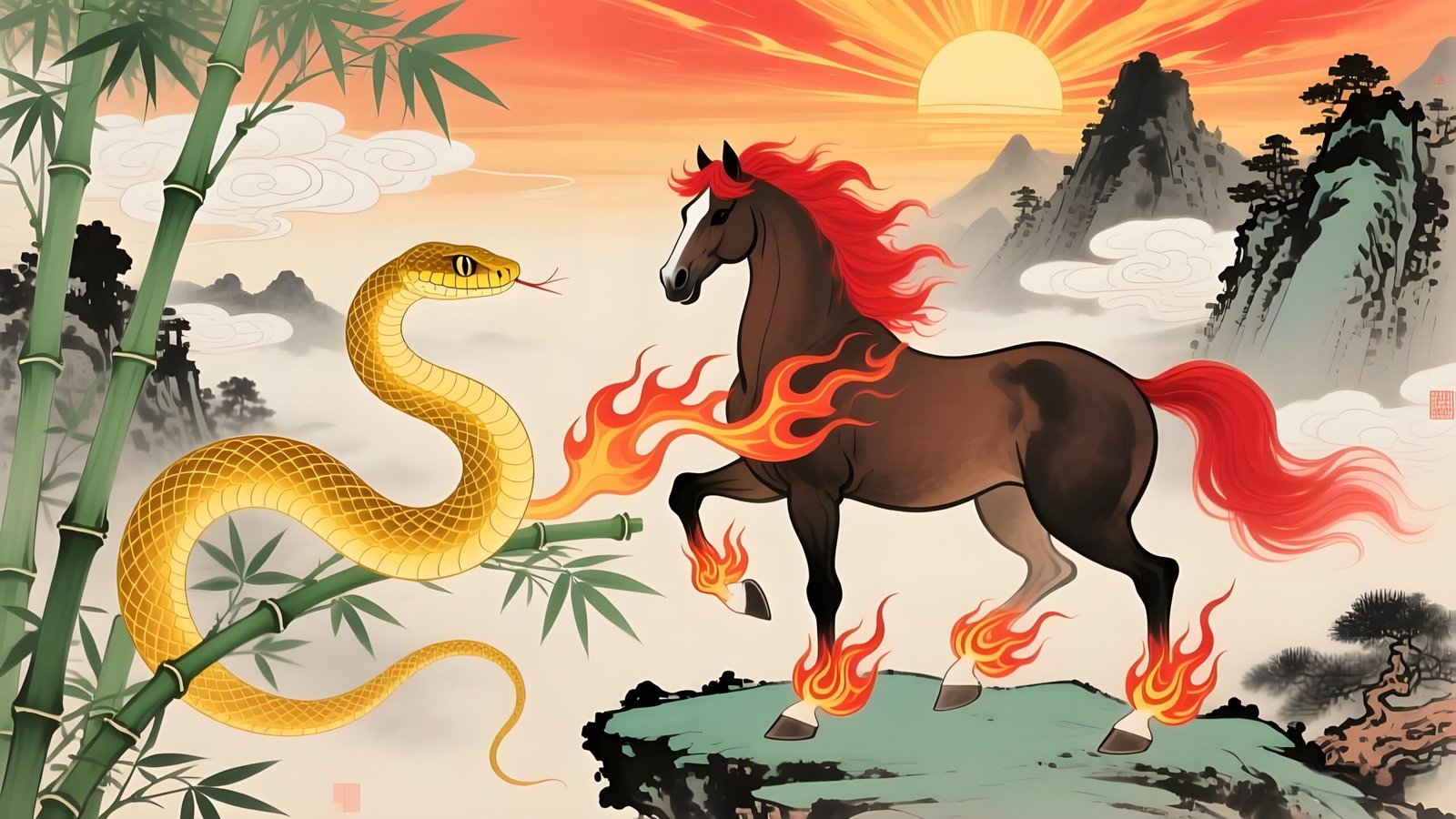
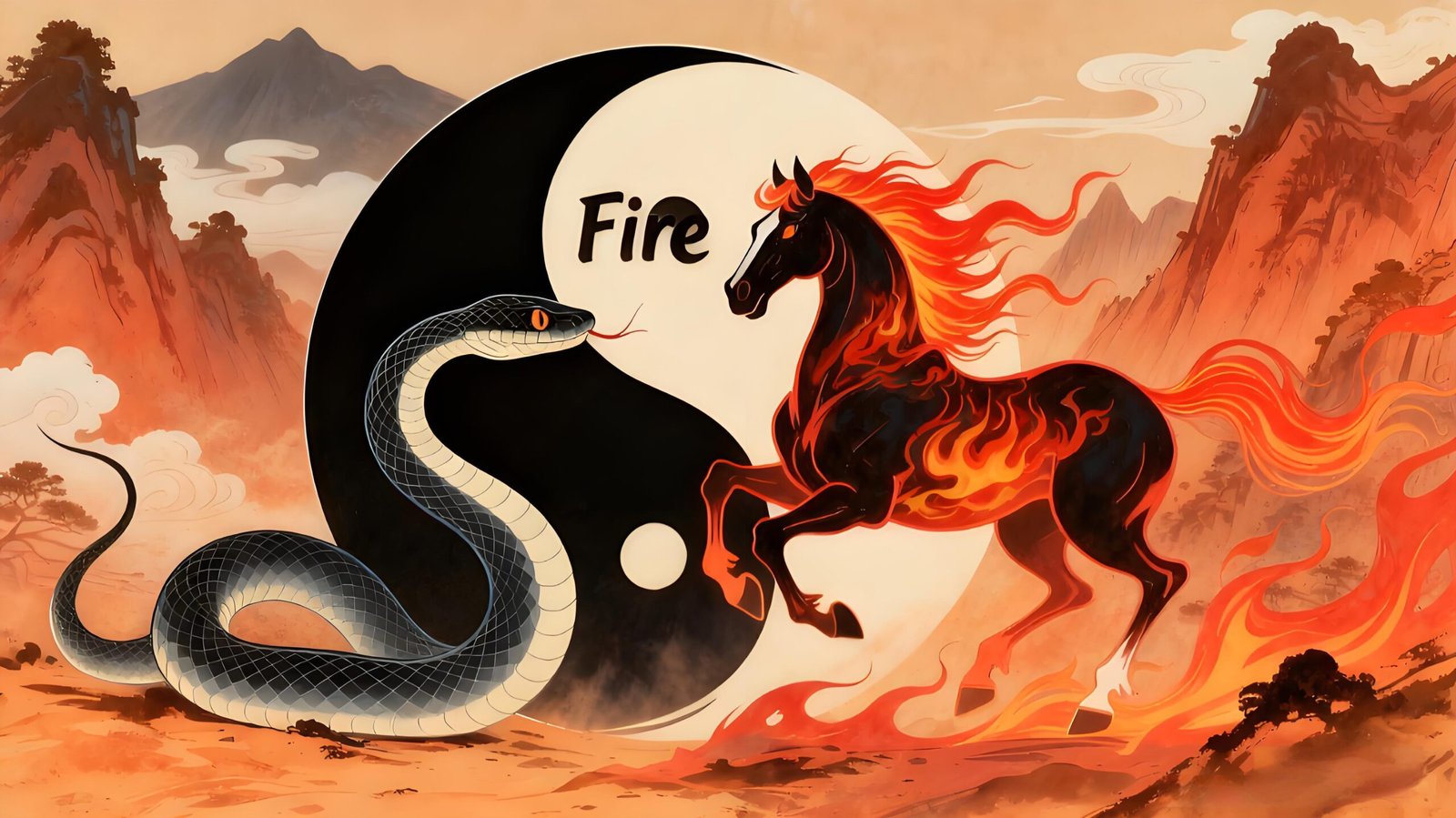
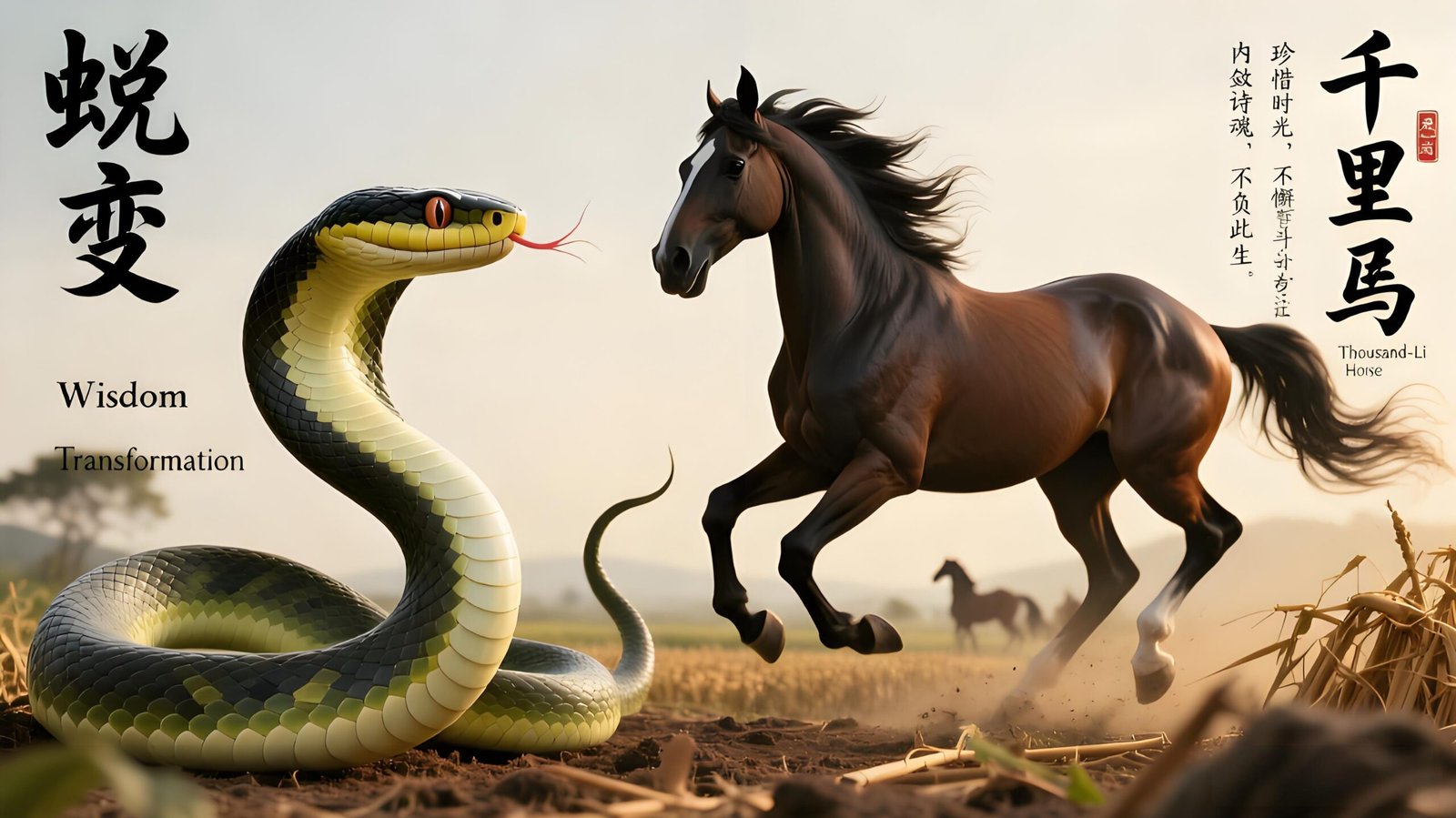
Among the Twelve Chinese Zodiac Signs, the Snake is of Yin nature and corresponds to “Fire” in the Five Elements. It symbolizes wisdom, introversion, and mystery. Its Fire attribute is relatively gentle, mostly reflected in meticulous thinking and strategic acumen rather than outward enthusiasm. The Horse, of Yang nature, also corresponds to “Fire”.
It represents vitality, ambition, and freedom. Its Fire attribute is fierce, often manifested in strong action ability, an outgoing personality, and abundant energy for outward breakthroughs. Although both belong to the Fire element, their different Yin-Yang attributes shape distinct traits: the Snake’s Yin Fire leans towards contemplation and dormancy, while the Horse’s Yang Fire focuses on action and leaping forward, forming a complementarity between “stillness” and “movement”.
2.Character
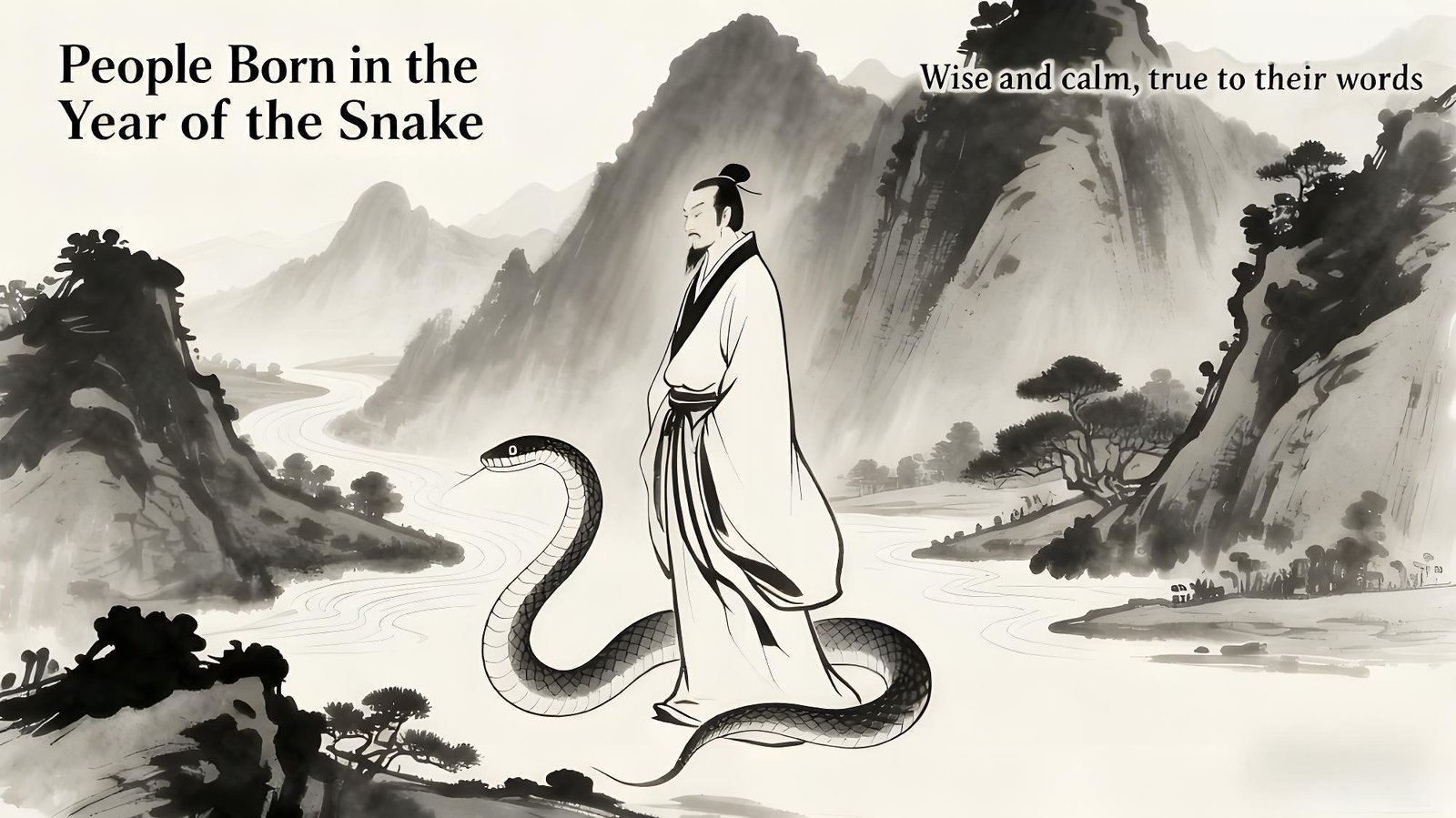
People born in the Year of the Snake are introverted and perceptive. They are good at noticing details, act calmly and with strong planning, and have great focus on their goals. However, they may seem a bit distant at times due to overthinking. They are adaptable, able to advance things steadily in complex environments, and though not outgoing in dealing with others, they value friendship and keep their promises.
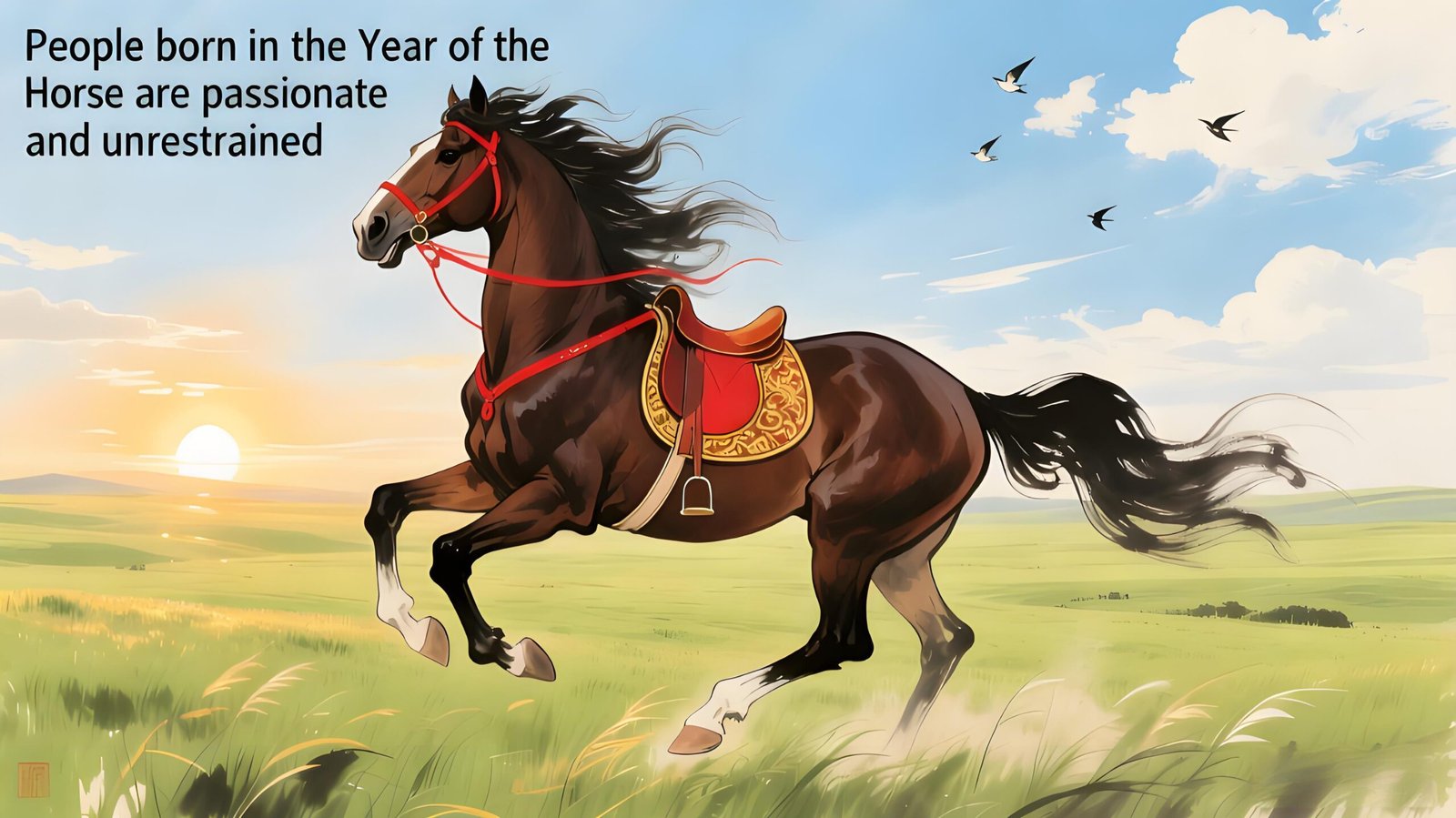
Those born in the Year of the Horse are enthusiastic, cheerful, energetic, and full of initiative and adventurous spirit. They are curious about new things and dare to break conventions. They treat others sincerely and openly, and are highly inspiring. Nevertheless, they may occasionally act imprudently due to impatience, and yearn for freedom, disliking being restricted.
3.Marriage
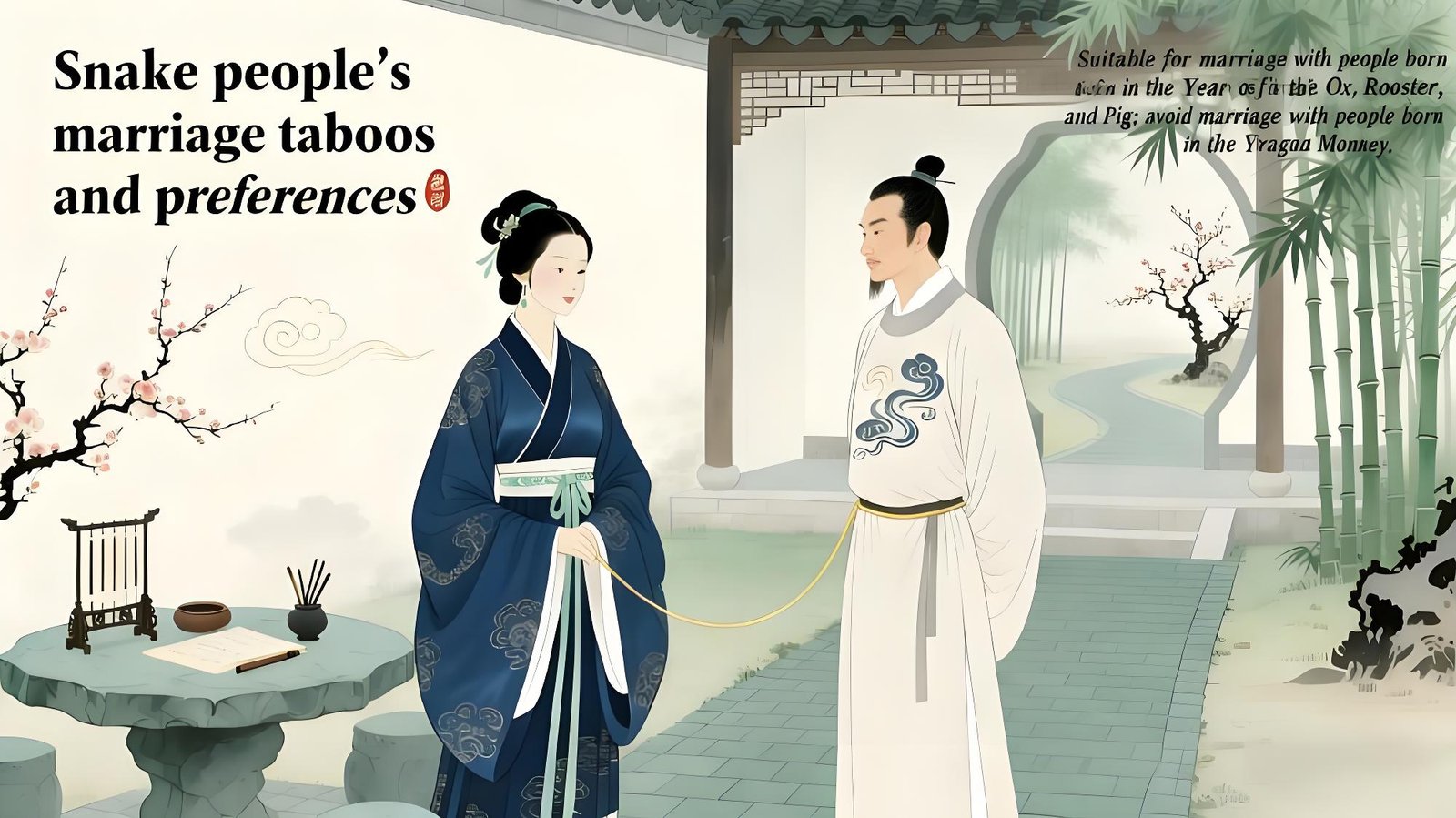
In the Chinese zodiac marriage culture, people born in the Year of the Snake are characterized by “reserve and sharpness”, and their compatibility varies with different zodiac pairings. Pairing with those born in the Year of the Monkey or Ox is a better choice: the Snake’s thoughtful planning can lay a solid foundation for the relationship, the Monkey’s agility can break the calm, and the Ox’s steadiness can meet their need for security, resulting in strong complementarity.
If paired with those born in the Year of the Tiger or Pig, more adjustments are needed. The Snake’s sensitivity may easily conflict with the Tiger’s dominance, so both sides must learn to compromise. Although the Pig’s gentleness can tolerate the Snake’s overthinking, the Snake’s slowness to open up may make the other feel distant, requiring active communication to resolve. For those born in the Year of the Snake, “opening up appropriately” is the key no matter who they marry; excessive caution will hinder the deepening of the intimate relationship.
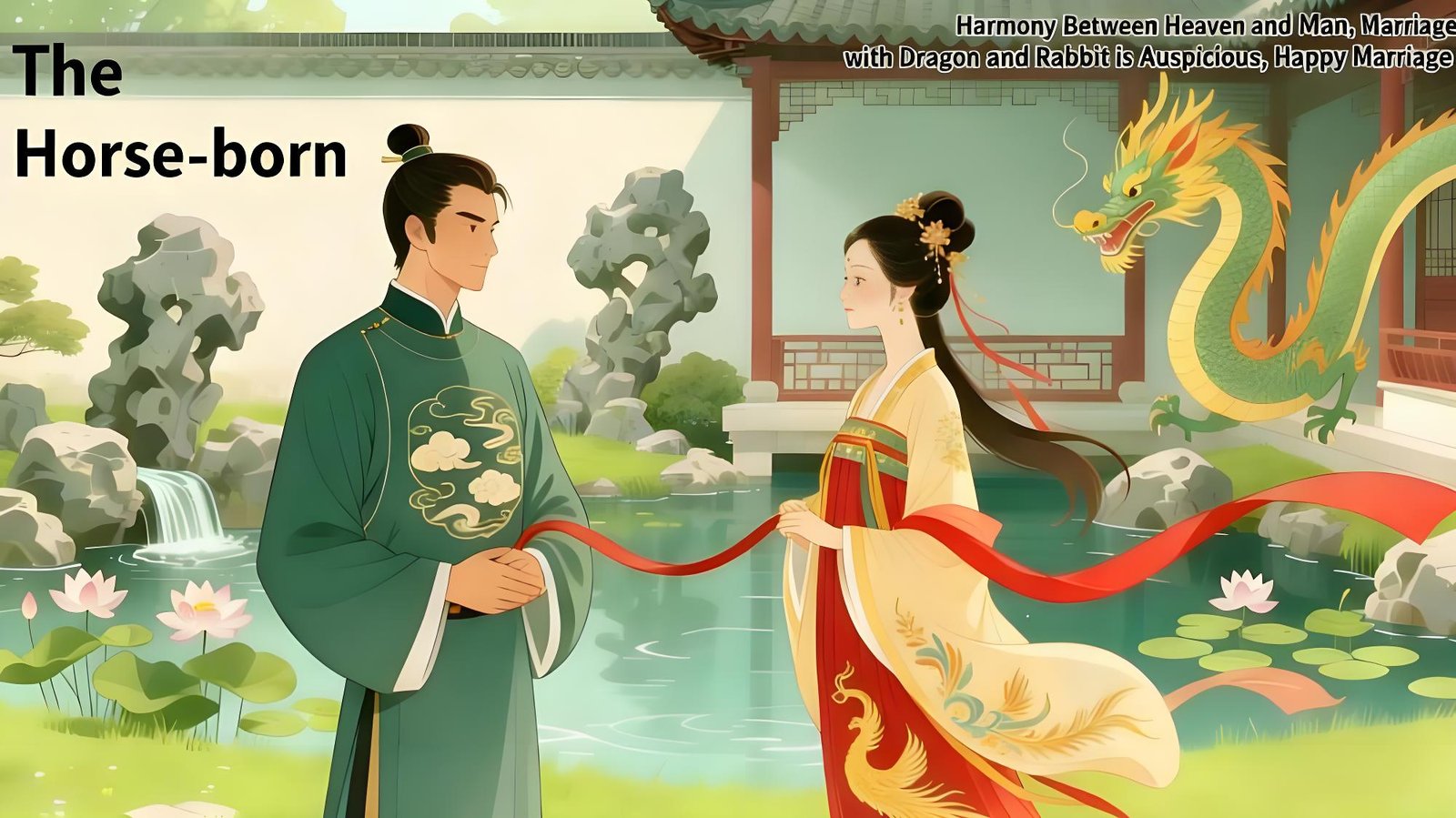
In the Chinese zodiac marriage culture, people born in the Year of the Horse are characterized by “enthusiasm, initiative, and a yearning for freedom”, with their compatibility varying by different zodiac pairings. Pairing with those born in the Year of the Tiger or Dog is a better choice: the Horse’s vitality resonates with the Tiger’s straightforwardness, as both love to explore; the Dog’s loyalty and steadiness can tolerate the Horse’s free-spiritedness and provide a stable backing, resulting in strong complementarity.
If paired with those born in the Year of the Rat or Ox, more adjustments are needed. The Horse’s casualness may easily conflict with the Rat’s meticulousness, requiring learning to empathize; while the Ox’s steadiness can balance the Horse’s impatience, the Horse’s pursuit of freedom may make the Ox feel uneasy, requiring communication to achieve tolerance. For those born in the Year of the Horse, “balancing freedom and responsibility” is the key no matter who they marry; excessive pursuit of freedom will affect the stability of the relationship.
4.Feng Shui
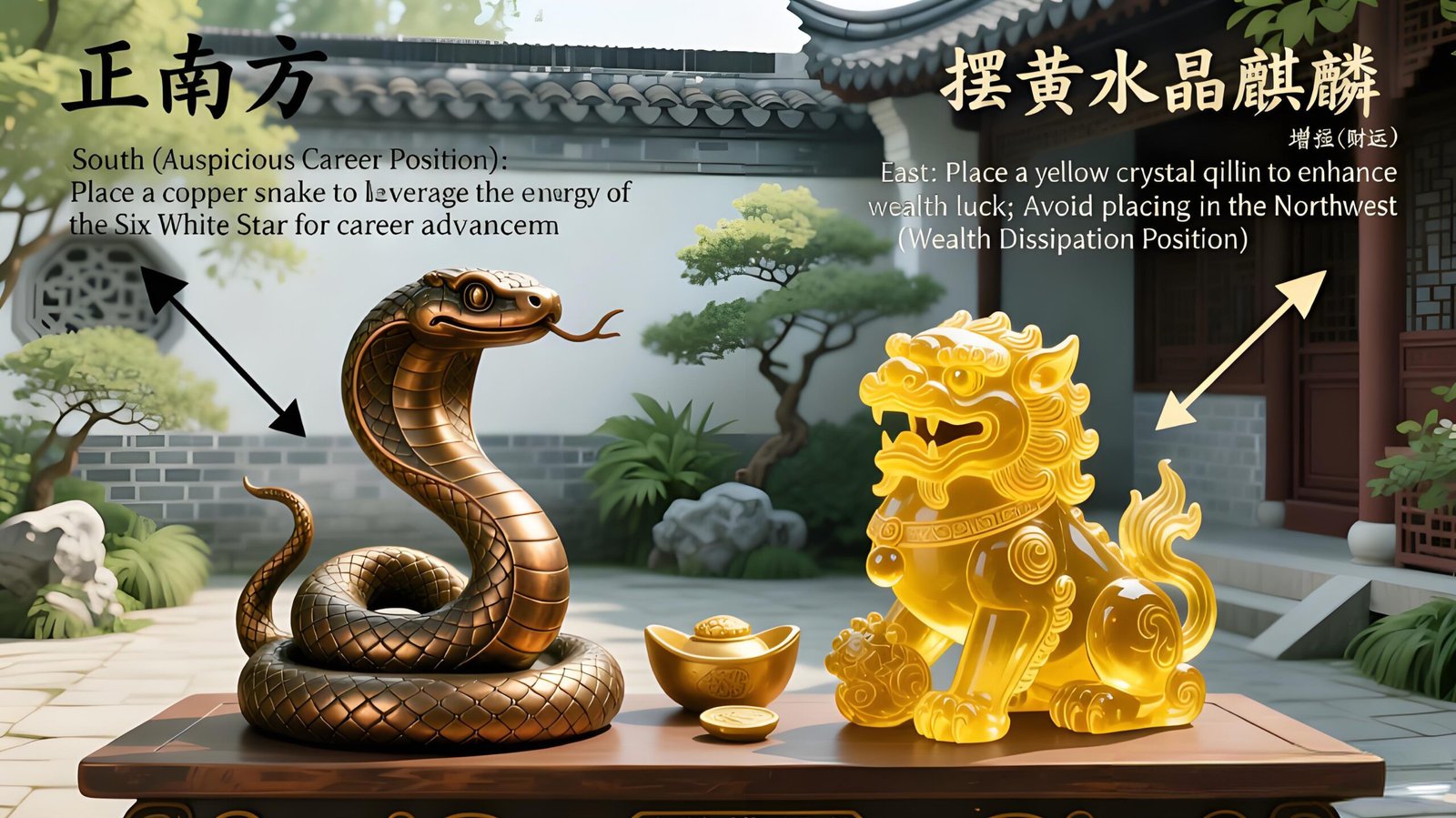
Auspicious Items: Bronze snake-shaped ornaments (to ward off evil and gather wealth), citrine Pixiu (to boost partial wealth).Placement Direction: Place the bronze snake in the due south (career auspicious position) to leverage the energy of the Six White Stars for career promotion; place the citrine Pixiu in the due east (wealth position) to enhance wealth-attracting ability. Avoid placing them in the northwest (a position where wealth dissipates).
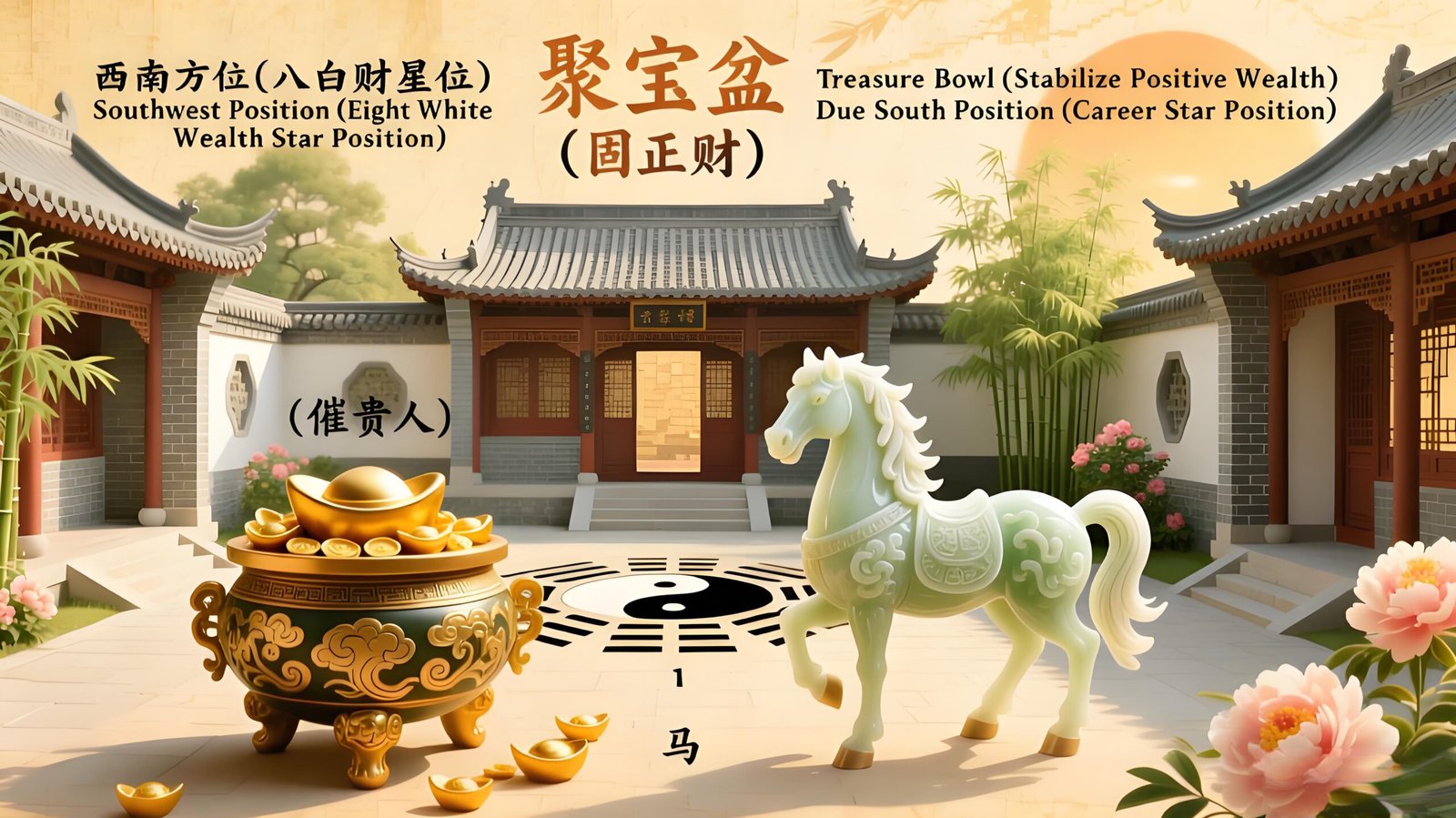
Auspicious Items: Jade horses (to attract noble people), treasure-gathering basins (to stabilize positive wealth).Placement Direction: Place the treasure-gathering basin in the southwest (position of the Eight White Wealth Stars) to stabilize positive wealth; place the jade horse in the due south (career star position) to attract noble people for career breakthroughs. It is advisable to match with warm lighting to strengthen the energy field.
5.Culture
In the culture of the Twelve Chinese Zodiac Signs, the Snake and the Horse carry rich symbolic meanings and profound implications. The Snake is often regarded as the embodiment of “wisdom” and “transformation”. Ancient people observed the Snake’s characteristic of shedding its skin and being reborn, believing it symbolizes the cycle of life and self-renewal. At the same time, the Snake is also associated with “mystery”—for example, in folk legends, snakes are often accompanied by spirituality and auspiciousness, yet they also carry the metaphor of “reserve and caution” due to their hibernating nature.
The Horse, on the other hand, is a symbol of “strength” and “progress”. In ancient times, horses were the core of farming, transportation, and military affairs, representing the vigorous vitality of charging forward. It also implies “loyalty” and “achievement”; for instance, the “thousand-li horse” refers to outstanding talents, embodying the aspiration for making contributions and achieving success. The Horse’s characteristic of running day and night also implies the admonition of “cherishing time and striving unremittingly”. One is quiet and the other is active—the calm wisdom of the Snake and the high-spirited vitality of the Horse complement each other, jointly forming the diverse understanding of life traits in Chinese culture.