
Clothing of the Song Dynasty: A Reflection of Traditional Chinese Culture
The Song Dynasty (960-1279 AD), a pivotal period in Chinese history, witnessed unprecedented prosperity in economy, culture, and technology, which was vividly mirrored in its clothing system. Diverging from the grand and flamboyant style of the Tang Dynasty, Song clothing featured simplicity, elegance, and subtlety, embodying the era’s cultural temperament shaped by Confucianism, especially the Cheng-Zhu Neo-Confucianism. This article explores the various categories of Song Dynasty clothing, their craftsmanship, and the profound traditional Chinese cultural connotations embedded within them, aiming to present a comprehensive picture of this important cultural heritage.
1. Social Background: The Foundation of Song Clothing Style
To understand Song Dynasty clothing, it is essential to first grasp the social context of the era. After the chaos of the Five Dynasties and Ten Kingdoms, the Song Dynasty established a centralized bureaucratic system and pursued a policy of “valuing literature over military affairs.” This policy fostered a prosperous literati culture, where scholars advocated for frugality, modesty, and adherence to etiquette—values that directly influenced clothing aesthetics.
Economically, the Song Dynasty saw remarkable development in agriculture, handicrafts, and commerce. The textile industry, in particular, achieved new heights: mulberry cultivation expanded, silk-reeling technology improved, and new fabrics such as Song brocade (Songjin) and Kesi (a type of tapestry) emerged. The thriving commodity economy also made clothing more accessible to different social classes, although strict hierarchical regulations still governed clothing styles, colors, and materials.
Confucianism, especially the rising Cheng-Zhu Neo-Confucianism in the Northern Song Dynasty, played a decisive role in shaping clothing norms. Neo-Confucians emphasized “the order of heaven and the principles of human relations,” advocating for clothing that conformed to one’s social status and moral virtues. This led to the rejection of excessive decoration and the pursuit of a dignified, restrained style.
2. Classification of Song Dynasty Clothing: Hierarchy and Diversity
Song Dynasty clothing was strictly hierarchical, with clear distinctions between the imperial family, officials, literati, commoners, and women. Each group’s clothing reflected their social status and followed specific etiquette regulations.
2.1 Imperial Family Clothing: Symbols of Supreme Authority
The imperial family’s clothing was the most elaborate and symbolic, representing the supreme authority of the emperor. The core imperial costumes included the Mianfu (coronation robe) and the Chaofu (court robe).
The Mianfu was worn by the emperor during grand ceremonies such as sacrifices to heaven and earth, and the enthronement ceremony. It followed the ancient system of “Xuan Yi Zong Shang” (black upper garment and crimson lower garment). The upper garment was black, embroidered with twelve imperial patterns (Shi’er Zhang), including the sun, moon, stars, mountains, dragons, phoenixes, and other auspicious symbols. These patterns symbolized the emperor’s virtues and supreme power, embodying the traditional Chinese concept of “the emperor being the son of heaven.” The lower garment was crimson, representing dignity and solemnity. The emperor also wore a Mian (coronation cap) adorned with jade beads (Liu Yu), and the number of beads corresponded to the ceremonial occasion.
The Chaofu was worn during court meetings. It was usually dark red, with dragon patterns embroidered on the front and back. The empress and imperial concubines also had their own ceremonial costumes. The empress’s Mianfu was similar to the emperor’s but with slightly different patterns and colors, reflecting the “hierarchy between men and women” in traditional Confucian culture.
Figure 1: Emperor’s Mianfu of the Song Dynasty – This painting depicts the Song Emperor wearing a Mianfu during a sacrifice ceremony. The black upper garment with twelve imperial patterns and the crimson lower garment are clearly visible, along with the Mian cap adorned with jade beads. The elaborate patterns and solemn colors fully demonstrate the supreme authority of the imperial family.
2.2 Official Clothing: Hierarchy Embodied in Colors and Patterns
Official clothing in the Song Dynasty was a direct manifestation of the bureaucratic hierarchy. The government strictly regulated the color, material, and decoration of official robes to distinguish between different ranks. This system, known as the “Pinse System” (rank color system), was inherited from the Tang Dynasty and further refined in the Song Dynasty.
According to the regulations, high-ranking officials (rank 1 to 3) wore purple robes; middle-ranking officials (rank 4 to 5) wore crimson robes; low-ranking officials (rank 6 to 7) wore green robes; and the lowest-ranking officials (rank 8 to 9) wore cyan robes. In addition to color, official robes were also adorned with “Fish Bags” (Yudai), which were leather bags containing a fish-shaped token. The material of the fish bag (gold, silver, or copper) also indicated the official’s rank. For example, high-ranking officials had gold fish bags, while low-ranking ones had copper ones. The fish bag system originated from the Tang Dynasty and served as both an identification and a symbol of honor.
Another distinctive feature of Song official clothing was the “Tiezhi” (tie), a narrow strip of fabric worn around the waist. The color and material of the tie also corresponded to the official’s rank, further reinforcing the hierarchical order. Officials also wore “Zhanmao” (official hats), which had different styles depending on the occasion. The most common one was the “Wusha Maojian” (black gauze hat with a pointed top), which became a symbol of officials in traditional Chinese culture.
Figure 2: Song Dynasty Officials in Court Robes – This mural from a Song Dynasty tomb shows a group of officials attending a court meeting. The officials wear robes of different colors (purple, crimson, and green), indicating their different ranks. The black gauze hats and fish bags are clearly visible, reflecting the strict hierarchical system of official clothing.
2.3 Literati Clothing: Elegance and Frugality
The literati class, which rose to prominence under the Song Dynasty’s “valuing literature” policy, had a unique clothing style that reflected their cultural tastes and moral pursuits. Literati clothing was characterized by simplicity, elegance, and comfort, avoiding excessive decoration.
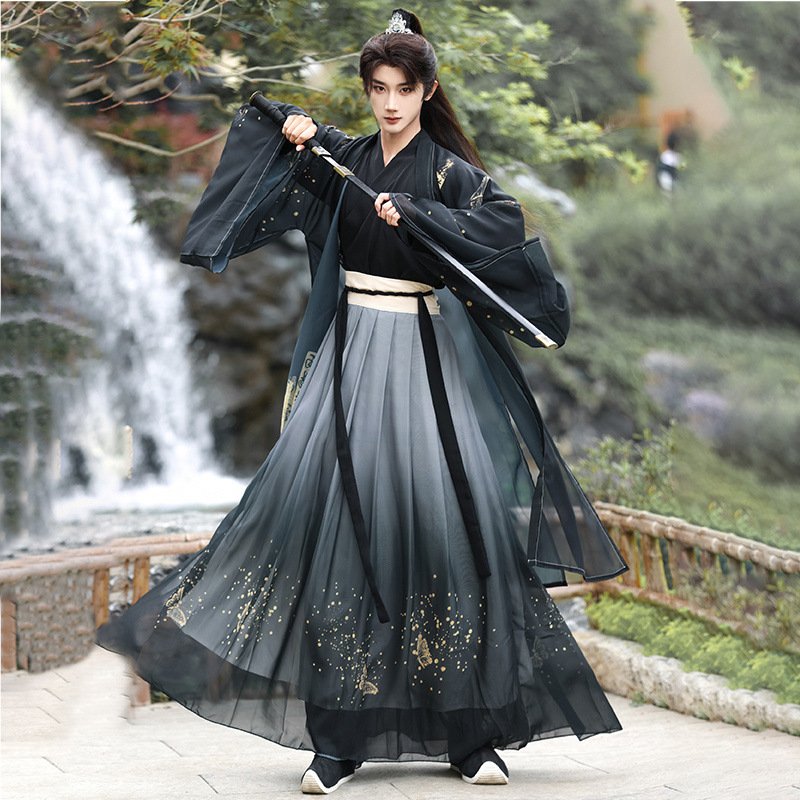
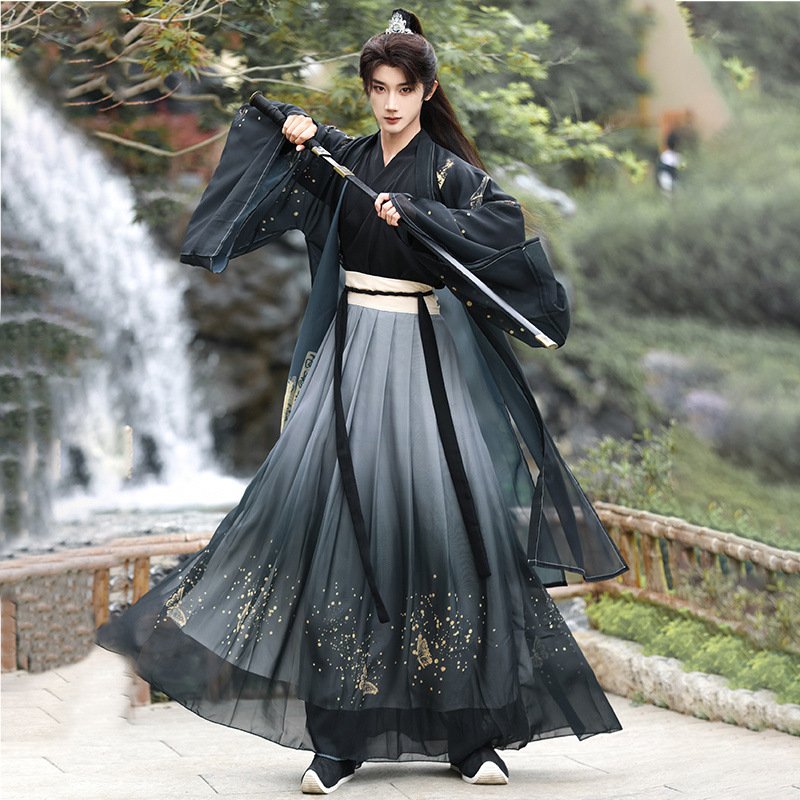
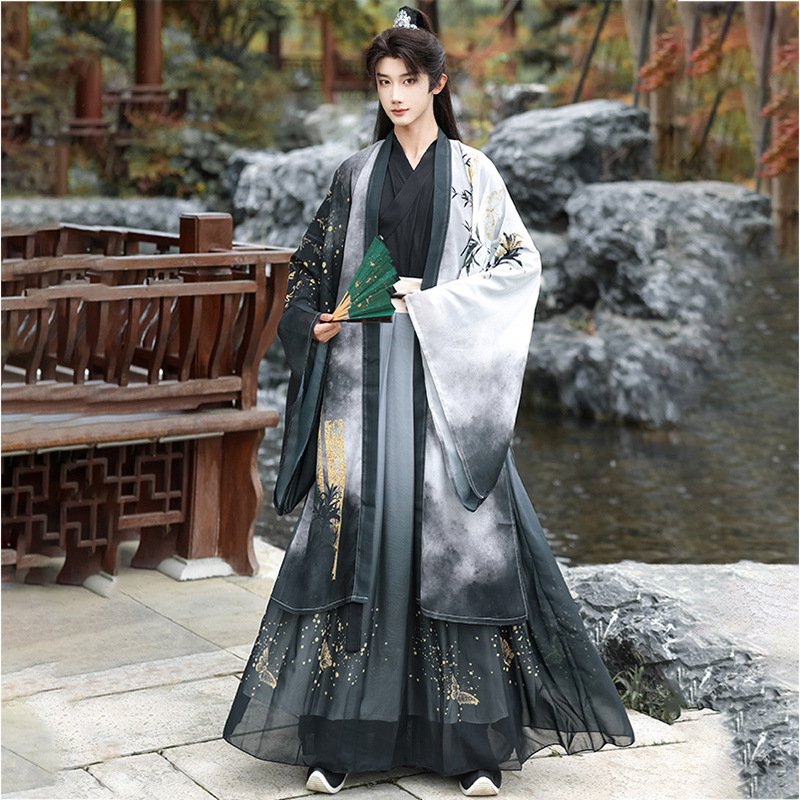
The most representative garment of the Song literati was the “Daopao” (Taoist robe), also known as the “Shan” (shirt). It was a loose-fitting robe with wide sleeves, made of plain silk or linen. The color was usually light, such as white, light blue, or gray. The Daopao was not only comfortable to wear but also symbolized the literati’s pursuit of freedom and detachment from worldly affairs.
In addition to the Daopao, literati also wore “Beizi” (a short coat) and “Kuzhe” (trousers). They often paired their clothing with a “Dudou” (belly band) and “Xue” (shoes made of cloth or silk). The literati’s headwear was usually a “Zhi” (a type of hat made of bamboo or silk), which was simple and elegant.
The literati’s clothing style was deeply influenced by Confucianism and Taoism. Confucianism emphasized modesty and frugality, while Taoism advocated for returning to nature. This combination gave literati clothing a unique cultural charm, which was later inherited by the literati of the Ming and Qing Dynasties.
Figure 3: Song Dynasty Literati in Daopao – This painting by a Song Dynasty artist depicts a literati sitting in a garden, wearing a light blue Daopao with wide sleeves and a bamboo Zhi on his head. The simple and elegant clothing complements the peaceful garden scenery, reflecting the literati’s leisurely and detached lifestyle.
2.4 Commoners’ Clothing: Practicality and Restrictions
Commoners’ clothing in the Song Dynasty was mainly practical, as they engaged in manual labor such as farming, handicrafts, and commerce. However, due to the strict hierarchical system, commoners’ clothing was subject to many restrictions on color, material, and style.
According to the regulations, commoners could only wear clothing made of linen or coarse silk; they were not allowed to wear fine silk such as brocade or satin. The color of their clothing was also restricted to dark colors such as black, brown, and gray; bright colors such as purple, crimson, and green (which were reserved for officials) were strictly prohibited. In addition, commoners were not allowed to wear robes with wide sleeves; their sleeves had to be narrow to facilitate labor.
The main garments of commoners included the “Yisan” (a short coat), “Kuzhe” (trousers), and “Mao” (a hat made of straw). Men usually wore their hair in a bun and covered it with a straw hat or a cloth cap. Women wore “Ruqun” (a jacket and skirt) or “Beizi” (a short coat). The jacket was short and narrow-sleeved, and the skirt was long, covering the feet. Commoners’ shoes were made of cloth or straw, which were durable and suitable for labor.
Despite the restrictions, the prosperous commodity economy of the Song Dynasty allowed commoners to have more choices in clothing. For example, in cities such as Bianjing (modern Kaifeng) and Lin’an (modern Hangzhou), commoners could buy various types of clothing and accessories in the markets, and some wealthy commoners even secretly wore fine silk clothing, reflecting the flexibility of the hierarchical system in practice.
Figure 4: Song Dynasty Commoners at Work – This stone carving from the Song Dynasty shows a group of farmers and craftsmen at work. They wear short coats, narrow-sleeved jackets, and straw hats. The practical clothing allows them to move freely during labor, while the dark colors conform to the regulations for commoners.
2.5 Women’s Clothing: Elegance and Diversity
Women’s clothing in the Song Dynasty was diverse and elegant, reflecting the changes in social customs and women’s social status. Although Confucianism emphasized “women’s virtues” and restricted women’s activities to a certain extent, the Song Dynasty still saw women playing an active role in society, which was reflected in their clothing.
The most representative women’s garment of the Song Dynasty was the “Beizi” (a short coat). It was a loose-fitting coat with a straight collar and side slits, worn over a “Ru” (a jacket) and a “Qun” (a skirt). The Beizi was made of various materials, such as silk, linen, and brocade, and came in a variety of colors, including white, pink, yellow, and green. It was popular among women of all social classes, from imperial concubines to commoners.
The “Ruqun” (a jacket and skirt) was another common women’s garment. The Ru was a short jacket with narrow sleeves, and the Qun was a long skirt with pleats. The skirt was usually made of silk and was decorated with patterns such as flowers, birds, and clouds. Women of the upper class often wore Ruqun made of fine brocade, while commoners wore Ruqun made of linen.
Women’s headwear in the Song Dynasty was very elaborate. The upper-class women wore “Jiazi” (a hairpin made of gold or jade) and “Dianzi” (a hair ornament). The most famous headwear was the “Huguan” (a tall hat), which was a cylindrical hat worn on top of the bun, decorated with pearls, jade, and flowers. Common women wore simpler headwear, such as “Toujin” (a cloth headband) and “Caizhi” (a hairpin made of bamboo or bone).
Figure 5: Song Dynasty Women in Beizi and Ruqun – This painting from the Song Dynasty “Along the River During the Qingming Festival” depicts women of different social classes wearing Beizi and Ruqun. The upper-class women wear Beizi made of fine silk and elaborate headwear, while the common women wear linen Beizi and simple headbands. The painting shows the diversity and elegance of Song women’s clothing.
3. Craftsmanship of Song Dynasty Clothing: The Pinnacle of Textile Art
The prosperity of the textile industry in the Song Dynasty laid a solid foundation for the development of clothing craftsmanship. Song Dynasty clothing craftsmanship reached a high level in weaving, dyeing, embroidery, and pattern design, embodying the wisdom and creativity of ancient Chinese craftsmen.
3.1 Weaving Technology: Innovation and Excellence
The Song Dynasty made significant innovations in weaving technology. The most famous fabrics of the Song Dynasty included Song brocade (Songjin), Kesi (tapestry), and Yunjin (cloud brocade). Song brocade was known for its fine texture, bright colors, and delicate patterns. It used a variety of weaving techniques, such as jacquard weaving and supplementary weft weaving, to create patterns of flowers, birds, dragons, and phoenixes. Kesi, also known as “carved silk,” was a type of tapestry made by weaving colored wefts into a plain warp. It had a three-dimensional effect and was often used to make imperial costumes and high-end clothing.
In addition to these high-end fabrics, the Song Dynasty also developed efficient weaving machines, such as the multi-harness loom, which improved weaving efficiency and quality. The widespread use of these machines made it possible to produce large quantities of textiles, meeting the needs of different social classes.
3.2 Dyeing Technology: Rich and Durable Colors
The Song Dynasty’s dyeing technology was also very advanced. Craftsmen used a variety of natural dyes, such as indigo (for blue), madder (for red), and pagoda tree flowers (for yellow), to dye textiles. They mastered complex dyeing techniques such as mordant dyeing, resist dyeing, and tie-dyeing, which could produce rich and durable colors.
One of the most famous dyeing techniques of the Song Dynasty was “Xuanse” (black dyeing). Song craftsmen could dye textiles into a deep, glossy black, which was highly sought after for official robes and commoners’ clothing. The durability of Song dyes was also remarkable; many preserved Song Dynasty clothing items still retain their bright colors after hundreds of years.
3.3 Embroidery and Pattern Design: Artistic Connotation
Embroidery was an important part of Song Dynasty clothing craftsmanship. Song embroidery was known for its delicate stitches and vivid patterns. The most common embroidery patterns included flowers (peonies, lotuses), birds (phoenixes, cranes), and auspicious symbols (clouds, bats). These patterns not only decorated the clothing but also carried cultural connotations.
For example, the peony pattern symbolized wealth and honor, the lotus symbolized purity and integrity, and the crane symbolized longevity. The pattern design of Song Dynasty clothing was also influenced by literati culture. Many patterns were simplified and abstract, reflecting the literati’s pursuit of elegance and subtlety. For example, the “Lingzhi” (ganoderma lucidum) pattern was often drawn in a simple and elegant style, avoiding excessive decoration.
Figure 6: Song Dynasty Embroidery Fabric – This preserved Song Dynasty embroidery fabric shows a peony pattern embroidered with silk threads of various colors. The delicate stitches and vivid colors demonstrate the high level of Song embroidery craftsmanship. The peony pattern symbolizes wealth and honor, reflecting the cultural connotations of Song clothing patterns.
4. Cultural Connotations of Song Dynasty Clothing: The Reflection of Traditional Values
Song Dynasty clothing was not only a practical necessity but also a carrier of traditional Chinese culture. It reflected the core values of Confucianism, the aesthetic tastes of literati culture, and the social customs of the era.
4.1 The Concept of Hierarchy: Maintaining Social Order
The strict hierarchical system of Song Dynasty clothing was a direct reflection of Confucian “li” (rituals). Confucianism emphasized “the difference between monarch and minister, father and son, and husband and wife,” and clothing was regarded as an important tool to maintain this hierarchical order. The regulations on clothing color, material, and decoration for different social classes ensured that everyone’s clothing conformed to their social status, thus maintaining social stability.
For example, the emperor’s Mianfu with twelve imperial patterns symbolized his supreme authority, while commoners’ dark-colored linen clothing reflected their subordinate status. This hierarchical concept was deeply rooted in the minds of the Song people and became an important part of traditional Chinese social culture.
4.2 The Aesthetic of Simplicity: The Pursuit of Moral Virtues
The simple and elegant style of Song Dynasty clothing reflected the aesthetic pursuit of the era, which was closely related to Confucian and Neo-Confucian values. Neo-Confucians advocated for “frugality and modesty” and opposed excessive luxury. They believed that clothing should be simple and practical, reflecting the wearer’s moral virtues.
This aesthetic was fully embodied in literati clothing. The loose-fitting Daopao, plain colors, and simple decorations reflected the literati’s pursuit of inner cultivation and detachment from material desires. Even the imperial family and officials’ clothing, although elaborate, avoided the excessive flamboyance of the Tang Dynasty, showing a more restrained and dignified style.
4.3 The Integration of Man and Nature: The Concept of “Heaven and Man in Harmony”
The pattern design and color selection of Song Dynasty clothing also reflected the traditional Chinese concept of “heaven and man in harmony.” Many clothing patterns were derived from nature, such as flowers, birds, mountains, and rivers, symbolizing the harmony between humans and nature.
For example, the cloud pattern was widely used in Song clothing, as clouds were regarded as a symbol of heaven and were believed to connect humans with the divine. The color selection of Song clothing also followed the concept of the five elements (gold, wood, water, fire, earth). For example, the emperor’s Mianfu used black (representing water) and crimson (representing fire), which were believed to be in harmony with the order of heaven and earth.
4.4 The Status of Women: Tradition and Change
Women’s clothing in the Song Dynasty reflected both traditional gender concepts and subtle changes in women’s social status. On the one hand, Confucianism emphasized “women’s obedience” and restricted women’s clothing to a certain extent, such as requiring women to wear modest and dignified clothing. On the other hand, the prosperity of the commodity economy and the active participation of women in social life led to more diverse and personalized women’s clothing.
For example, the Beizi, which was popular among women of all social classes, was a loose and comfortable garment that allowed women to move freely, reflecting the improvement of women’s quality of life. The elaborate headwear worn by upper-class women also showed their pursuit of beauty and individual expression, breaking through the traditional constraints of “women not being allowed to show off.”
5. The Legacy of Song Dynasty Clothing: Influences on Later Generations
Song Dynasty clothing had a profound influence on the clothing systems of the Ming and Qing Dynasties and even on modern Chinese clothing. Its simple and elegant style, strict hierarchical system, and exquisite craftsmanship were inherited and developed by later generations.
The Ming Dynasty inherited the Song Dynasty’s clothing system, such as the Pinse System for officials and the style of women’s Ruqun. The Ming Dynasty’s Daopao was also developed from the Song Dynasty’s literati Daopao, becoming a common garment for scholars and officials. The Qing Dynasty, although it introduced Manchu clothing, also absorbed elements of Song Dynasty clothing, such as the use of silk fabrics and embroidery patterns.
In modern times, Song Dynasty clothing has become an important source of inspiration for Chinese fashion designers. The simple and elegant Beizi, the delicate embroidery patterns, and the traditional colors of Song clothing have been integrated into modern fashion designs, showing the enduring charm of traditional Chinese clothing culture.
Moreover, Song Dynasty clothing is an important part of China’s intangible cultural heritage. The weaving, dyeing, and embroidery techniques of Song clothing have been passed down to this day, and are protected and promoted by the government and cultural institutions. These techniques not only have historical and cultural value but also have important practical value in modern textile production.
6. Conclusion
The clothing of the Song Dynasty is a brilliant chapter in the history of Chinese clothing. It reflects the unique social background, cultural temperament, and technological level of the Song Dynasty. From the imperial family’s elaborate Mianfu to the commoners’ practical linen clothing, from the officials’ hierarchical court robes to the literati’s elegant Daopao, each type of Song clothing carries rich cultural connotations, embodying the core values of traditional Chinese culture such as hierarchy, frugality, and harmony between man and nature.
The craftsmanship of Song Dynasty clothing, such as weaving, dyeing, and embroidery, represents the pinnacle of ancient Chinese textile art, demonstrating the wisdom and creativity of Chinese craftsmen. The legacy of Song Dynasty clothing has influenced later generations for centuries and continues to shine in modern times.
In today’s era of cultural globalization, studying Song Dynasty clothing is of great significance. It not only helps us understand the history and culture of the Song Dynasty but also enables us to inherit and carry forward the excellent traditional Chinese culture, making it an important part of global cultural heritage.