
Tang Dynasty Hanfu: A Magnificent Carrier of Chinese Traditional Culture
Hanfu, the traditional attire of the Han ethnic group, stands as a vivid epitome of Chinese civilization, encapsulating thousands of years of historical evolution, aesthetic pursuits, and cultural values. Among the numerous dynasties that have shaped Hanfu’s development, the Tang Dynasty (618 CE – 907 CE) emerges as the most brilliant epoch. Known as the “Prosperous Tang,” this era was characterized by unprecedented economic prosperity, political stability, and cultural openness. Such a vibrant social backdrop nurtured Tang Dynasty Hanfu into a style that was diverse, bold, and magnificent—breaking free from the relatively rigid ritual constraints of previous dynasties while inheriting the essence of traditional Chinese culture. It not only absorbed elements from neighboring ethnic groups and even distant Western regions but also integrated them seamlessly with native traditions, forming a unique sartorial culture that reflected the Tang people’s self-confidence, inclusiveness, and pursuit of beauty. This article delves into the core styles, exquisite craftsmanship, rich cultural connotations, and enduring legacy of Tang Dynasty Hanfu, unraveling how this iconic attire serves as a living witness to the glory of Tang civilization and a profound carrier of Chinese traditional culture.
1. Historical Background: The Breeding Ground for Tang Dynasty Hanfu’s Glory
To truly understand the uniqueness and grandeur of Tang Dynasty Hanfu, it is essential to situate it within the historical context of the Tang Dynasty. As one of the most powerful and influential dynasties in Chinese history, the Tang Dynasty created a social environment that was highly conducive to the development of clothing culture.
Economically, the Tang Dynasty witnessed remarkable progress in agriculture, handicrafts, and commerce. The improvement of agricultural techniques led to increased grain production, providing a solid material foundation for the development of other industries. The textile industry, in particular, reached unprecedented heights—sericulture spread widely across the country, with famous silk-producing regions such as Chang’an (the capital), Luoyang, Yangzhou, and Chengdu. These regions produced a wide variety of high-quality silk fabrics, including brocade, damask, gauze, and satin, which laid the material groundwork for the exquisiteness of Tang Dynasty Hanfu. Meanwhile, the flourishing commerce, both domestic and foreign, promoted the circulation of textiles and clothing materials. The Silk Road, which reached its peak during this period, facilitated the exchange of textile techniques and clothing styles between China and Western regions, bringing in new fabrics like woolen cloth and cotton, as well as novel decorative patterns.
Politically, the Tang Dynasty implemented a series of inclusive and stable policies. The rulers advocated for cultural openness and ethnic integration, which broke down the barriers between different ethnic groups. This political environment encouraged the absorption of clothing elements from ethnic groups such as the Hu (a general term for ethnic groups in Central Asia) and promoted the innovation of Hanfu styles. Additionally, the Tang government established a relatively complete system of etiquette and attire, which regulated the clothing of different social classes while also leaving room for aesthetic innovation. For example, although the color and decoration of official robes were strictly regulated to reflect hierarchy, the styles of daily clothing for the general public were relatively flexible, allowing for the emergence of diverse fashion trends.
Culturally, the Tang Dynasty was a period of great prosperity and integration. Confucianism remained the dominant ideology, but it coexisted harmoniously with Taoism, Buddhism, and even foreign religions like Islam and Nestorian Christianity. This pluralistic cultural atmosphere broadened the aesthetic horizons of the Tang people and influenced the design of Hanfu. For instance, Buddhist motifs such as lotus flowers and bodhi leaves were widely used in embroidery patterns, while Taoist concepts of “harmony with nature” were reflected in the use of natural colors and loose-fitting styles. Furthermore, extensive cultural exchanges with countries such as Japan, Korea, India, and Persia brought in new artistic ideas, which were integrated into Tang Dynasty Hanfu, creating a style that was both distinctly Chinese and internationally influenced.
2. Core Styles of Tang Dynasty Hanfu: Diversity and Bold Innovation
Tang Dynasty Hanfu exhibited an unprecedented diversity in styles, with significant variations between men’s and women’s clothing, as well as between formal and casual attire. This diversity was a result of the era’s openness, economic prosperity, and cultural integration. The core styles included Ruqun (jacket and skirt ensemble) for women, Yuanlingpao (round-collar robe) for men, and Banbi (half-sleeve jacket) as a popular accessory, among others. Each style had its unique characteristics and cultural implications.
2.1 Women’s Clothing: Boldness, Elegance, and Fashion Consciousness
Women’s clothing in the Tang Dynasty was the most distinctive and innovative aspect of Tang Hanfu, reflecting the improved social status of women and their enhanced pursuit of beauty. Unlike the relatively conservative styles of previous dynasties, Tang women’s clothing was characterized by bold designs, bright colors, and diverse styles. The most representative styles were Ruqun, Beizi (long coat), and Hufu (Hu-style clothing).
2.1.1 Ruqun: The Dominant Style of Tang Women’s Daily Wear
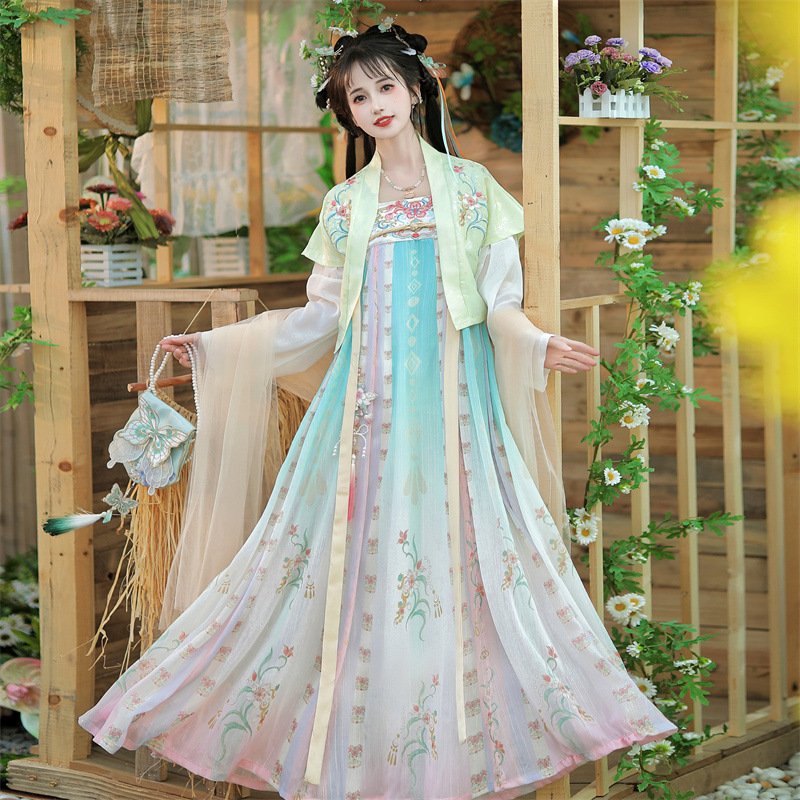
Ruqun was the most popular and widely worn style of women’s clothing in the Tang Dynasty. It consisted of a short upper jacket (Ru) and a long lower skirt (Qun), and its design evolved significantly throughout the Tang Dynasty, reflecting changing fashion trends.
In the early Tang Dynasty, Ruqun inherited some characteristics of the Sui Dynasty (581 CE – 618 CE) clothing— the jacket was relatively long, reaching the waist or even below, with a high neckline and narrow sleeves. The skirt was usually tied at the waist, with a hem that reached the ankles. As the Tang Dynasty entered its prosperous period (the 7th to 8th centuries), Ruqun underwent a dramatic transformation. The jacket became shorter, often only reaching the chest, and the neckline became lower and more open, sometimes exposing the collarbone and part of the chest—a bold design that was unprecedented in Chinese history. This open neckline was not only a manifestation of aesthetic innovation but also a reflection of the open social atmosphere of the Tang Dynasty. The sleeves of the jacket also became wider, sometimes as wide as several feet, creating a fluttering and elegant effect when walking.
The skirt of the Tang Ruqun was equally distinctive. It was usually a long, full skirt made of lightweight fabrics such as silk or gauze. A notable feature was the high waist design— the skirt was tied above the chest, which not only made the wearer’s figure appear taller and slimmer but also allowed for a larger skirt circumference, creating a graceful silhouette. The skirt was often made of multiple layers of fabric, with the outer layer being a thin, transparent gauze that revealed the inner layers of colored silk, adding a sense of depth and lightness. The colors of the skirt were extremely bright and diverse, including red, purple, yellow, green, and blue. Noble women often wore skirts in bright colors such as crimson and purple, while common women preferred lighter colors like light blue and green.
The decoration of Ruqun was also very elaborate. The cuffs, collars, and hems of the jacket were often trimmed with lace or embroidery. The skirt was decorated with various patterns, including floral motifs (such as peonies, lotuses, and peaches), animal motifs (such as phoenixes, cranes, and butterflies), and geometric patterns. Among them, the “Shanhe Shui” (mountains, rivers, and water) pattern was particularly popular—it combined natural landscapes with mythological elements, reflecting the Tang people’s love for nature and their broad vision. Some noble women’s skirts were even decorated with gold threads or precious stones, making them extremely luxurious.
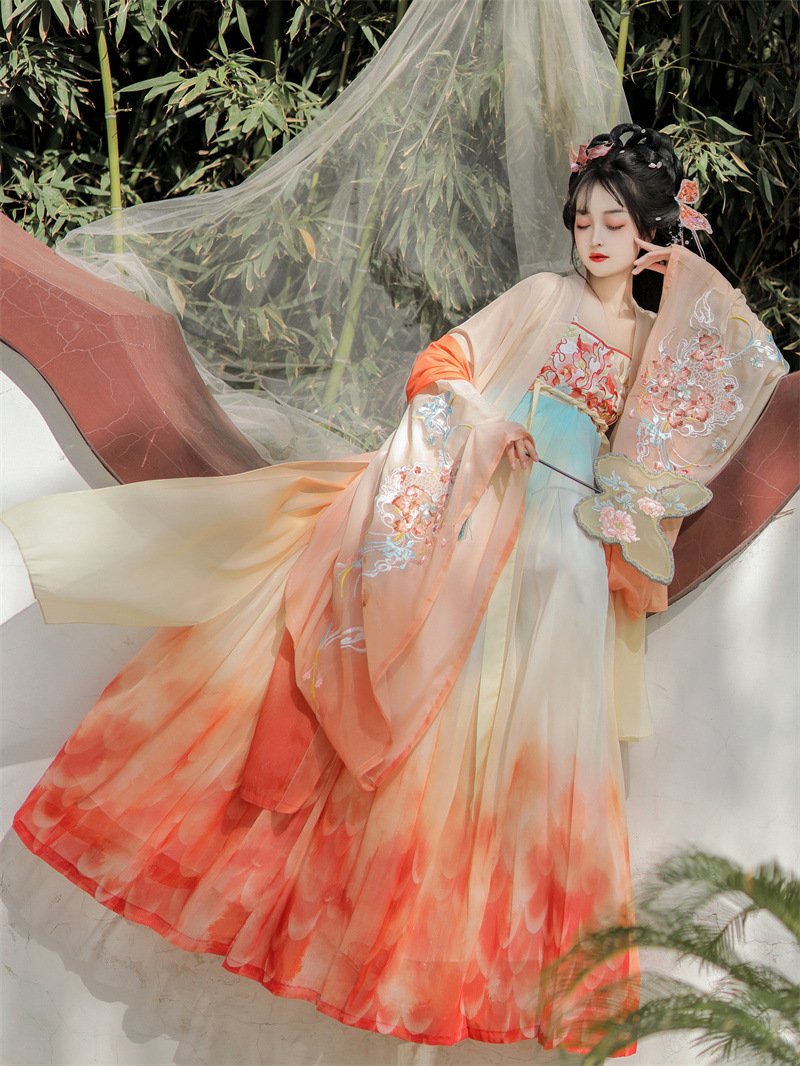
A unique variant of Ruqun in the Tang Dynasty was the “Nishang Yuyi” (rainbow-feathered garment), a luxurious costume worn by noble women on important occasions such as imperial banquets and religious ceremonies. It was made of the finest silk gauze, which was light, transparent, and had a soft luster. The garment was composed of multiple layers of sleeves and a skirt, with each layer decorated with delicate embroidery of feather-like patterns, clouds, and fairies. When the wearer moved, the layers of fabric fluttered like a rainbow, hence the name “Nishang Yuyi.” The Nishang Yuyi was not only a masterpiece of clothing craftsmanship but also a symbol of the prosperity and luxury of the Tang Dynasty. According to historical records, the Nishang Yuyi was often worn with matching jewelry such as jade pendants, gold hairpins, and pearl earrings, creating a stunning overall effect.
2.1.2 Beizi: The Versatile Outer Garment
Beizi, a long, loose-fitting outer coat, was another popular style of women’s clothing in the Tang Dynasty. It originated from the clothing of the Wei, Jin, Southern and Northern Dynasties (220 CE – 589 CE) and was further developed and popularized in the Tang Dynasty. The Beizi was characterized by its loose fit, wide sleeves, and simple design—it had no buttons or fasteners, and was usually worn open or tied with a sash at the waist.
The length of the Beizi varied, with some reaching the knees and others reaching the ankles. It was made of a variety of fabrics, including silk, gauze, and linen. In summer, light and transparent gauze Beizi were popular, which could block the sun while keeping cool. In winter, thicker silk or woolen Beizi were worn to keep warm. The colors of the Beizi were relatively subdued compared to Ruqun, with white, light gray, and light blue being common, but noble women also wore Beizi in bright colors such as red and purple, often decorated with embroidery on the cuffs and collars.
The Beizi was a very versatile garment—it could be worn over Ruqun for daily activities, or as a formal attire when paired with elegant accessories. Its loose fit made it comfortable to wear, and its simple design made it suitable for women of all social classes. The popularity of the Beizi reflected the Tang people’s pursuit of comfort and practicality in clothing.
2.1.3 Hufu: The Fusion of Ethnic Styles
Hufu, referring to the clothing styles of ethnic groups in Central Asia and other Western regions, was extremely popular in the Tang Dynasty, especially among noble women and young girls. This popularity was a result of the Tang Dynasty’s cultural openness and frequent ethnic exchanges.
Tang Dynasty Hufu for women was characterized by tight-fitting designs, narrow sleeves, and practical styles. It usually consisted of a tight-fitting jacket, tight pants, and boots. The jacket was short, reaching the waist, with a high neckline and narrow sleeves, which highlighted the curves of the body. The pants were tight-fitting and often tucked into boots, making it convenient for riding, hunting, and other activities. The fabrics used for Hufu included woolen cloth, leather, and silk, with bright colors and bold patterns such as stripes, checks, and animal motifs.
The popularity of Hufu had a profound impact on Tang Dynasty Hanfu. It not only provided a new fashion choice for Tang women but also influenced the design of traditional Hanfu. For example, the narrow sleeves of Hufu were adopted in some styles of Ruqun, making them more practical for daily activities. The bold color combinations of Hufu also inspired the color matching of traditional Hanfu. As the Tang poet Bai Juyi wrote in his poem “Song of the Hu Clothing”: “Hu clothes and Hu music are popular in the capital, and everyone loves the new style.” This poem vividly describes the popularity of Hufu in the Tang Dynasty capital Chang’an.
2.2 Men’s Clothing: Practicality, Hierarchy, and Inclusiveness
Compared to women’s clothing, men’s clothing in the Tang Dynasty was more focused on practicality and hierarchy, but it also showed inclusiveness and innovation. The core styles included Yuanlingpao (round-collar robe), Daopao (Taoist robe), and Hufu. These styles not only met the practical needs of men’s social activities but also reflected their social status and cultural identity.
2.2.1 Yuanlingpao: The Dominant Style of Men’s Clothing
Yuanlingpao, a round-collar robe with narrow sleeves, was the most popular and widely worn style of men’s clothing in the Tang Dynasty. It originated from the clothing of the Hu ethnic groups in Central Asia and was introduced to the Central Plains during the Wei, Jin, Southern and Northern Dynasties. After being improved and localized in the Tang Dynasty, it became the mainstream men’s clothing, worn by people of all social classes from emperors to commoners.
The design of the Tang Dynasty Yuanlingpao was simple and practical. It had a round collar, a front placket with buttons (usually made of jade or bone), and narrow sleeves that were convenient for riding, writing, and other activities. The length of the robe varied according to social status—emperors and high-ranking officials wore long robes that reached the ankles, while commoners wore shorter robes that reached the knees to facilitate labor. The fabric of the Yuanlingpao also varied by social status: emperors and nobles wore robes made of fine silk such as brocade and satin, while commoners wore robes made of cotton or linen.
The most distinctive feature of the Yuanlingpao was its color and decoration, which strictly reflected social hierarchy. According to the “New Book of Tang·Records of Rites and Attire,” the color of the Yuanlingpao was regulated as follows: emperors wore yellow robes (yellow was exclusive to the royal family in the Tang Dynasty) with dragon patterns embroidered on them, symbolizing imperial power; first-rank to third-rank officials wore purple robes; fourth-rank and fifth-rank officials wore crimson robes; sixth-rank and seventh-rank officials wore green robes; eighth-rank and ninth-rank officials wore cyan robes; commoners could only wear gray or white robes. In addition, officials also wore accessories such as “fish bags” (a bag for holding fish-shaped talismans) at their waists, which were also divided into different grades—golden fish bags for first-rank to third-rank officials, silver fish bags for fourth-rank and fifth-rank officials, and copper fish bags for sixth-rank to ninth-rank officials. These accessories further highlighted the hierarchical nature of men’s clothing.
2.2.2 Daopao: The Reflection of Taoist Culture
Daopao, a loose-fitting robe inspired by Taoist clothing, was another important style of men’s clothing in the Tang Dynasty. It was mainly worn by scholars, Taoists, and hermits, reflecting their pursuit of simplicity, nature, and freedom.
The design of the Tang Dynasty Daopao was characterized by its loose fit, wide sleeves, and simple style. It had a cross-collar (similar to the traditional Hanfu collar) and was tied with a sash at the waist. The length of the Daopao was usually long, reaching the ankles, and the fabric was mainly plain silk or linen in colors such as white, light gray, and light blue. Unlike the Yuanlingpao, the Daopao had no elaborate decorations, emphasizing simplicity and elegance.
The popularity of the Daopao was closely related to the rise of Taoism in the Tang Dynasty. The Tang rulers claimed to be descendants of Laozi (the founder of Taoism), so Taoism was highly respected and became one of the dominant religions in the dynasty. The Daopao, as a symbol of Taoist culture, was favored by scholars and literati who advocated Taoist concepts of “returning to nature” and “living in seclusion.” Many famous Tang poets, such as Li Bai and Wang Wei, were often depicted wearing Daopao in paintings, reflecting their spiritual pursuit of freedom and detachment.
2.2.3 Hufu for Men: Practicality and Fashion
Similar to women’s clothing, Hufu was also popular among men in the Tang Dynasty, especially among nobles, officials, and young men. Men’s Hufu in the Tang Dynasty was mainly composed of a tight-fitting jacket, tight pants, and high boots, which were very suitable for riding, hunting, and military activities.
The jacket of men’s Hufu was short and tight, with a high neckline and narrow sleeves, which allowed for free movement of the arms. The pants were also tight-fitting and made of durable fabrics such as leather or woolen cloth. The boots were high, reaching the calves, and were made of leather, which was suitable for riding on horseback. The colors of men’s Hufu were bold and bright, with red, blue, and green being common, and the fabrics were often decorated with geometric patterns or animal motifs.
The popularity of men’s Hufu was not only due to its practicality but also a reflection of the Tang people’s pursuit of fashion and ethnic integration. Many emperors and high-ranking officials in the Tang Dynasty loved to wear Hufu when hunting or participating in military parades, and even incorporated Hufu elements into formal attire. For example, some officials’ Yuanlingpao adopted the narrow sleeves of Hufu, making it more practical for official activities.
2.3 Accessories: The Finishing Touch to Tang Dynasty Hanfu
Accessories were an indispensable part of Tang Dynasty Hanfu, not only serving practical functions but also enhancing the aesthetic effect and reflecting social status. The main accessories included hair ornaments, jewelry, belts, and shoes, each with its unique style and cultural connotations.
2.3.1 Hair Ornaments: A Display of Women’s Beauty
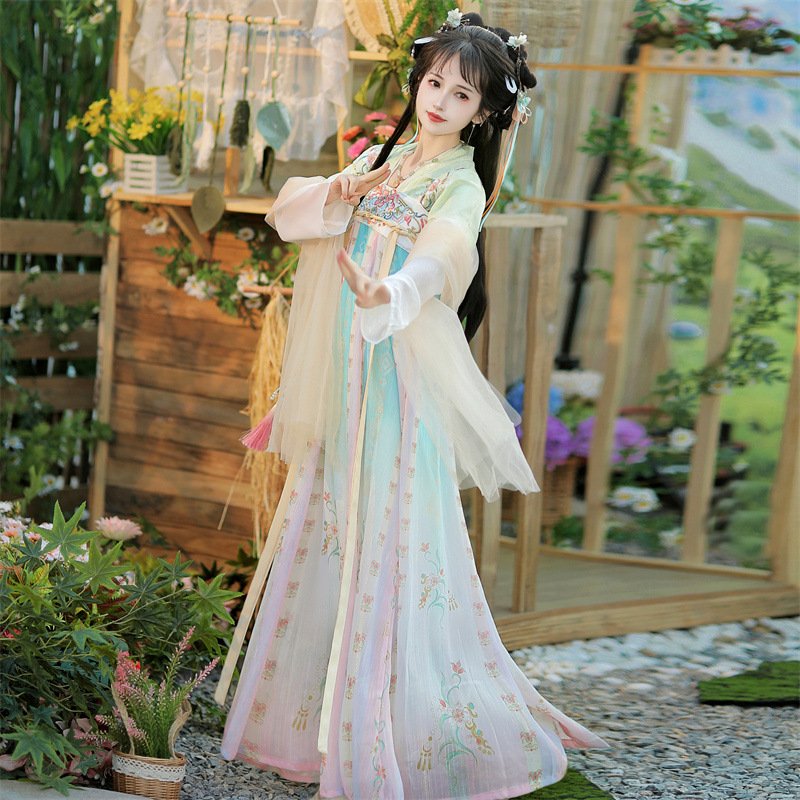
Tang women paid great attention to their hairstyles and hair ornaments, which were an important part of their overall appearance. There were a wide variety of hairstyles in the Tang Dynasty, including the “double bun” (two buns on both sides of the head), “high bun” (a tall bun on the top of the head), and “side bun” (a bun on one side of the head). Different hairstyles matched different hair ornaments, creating a rich and varied look.
The most common hair ornaments were hairpins, combs, and hair flowers. Hairpins were made of materials such as gold, silver, jade, and ivory, with exquisite carvings or inlays of precious stones. The shape of hairpins was diverse, including floral shapes, animal shapes, and human shapes. For example, the “phoenix hairpin” was a favorite of noble women—it was carved into the shape of a phoenix, symbolizing auspiciousness and nobility. Combs were usually made of ivory or tortoiseshell, with delicate patterns carved on the back. Hair flowers were made of fresh flowers or artificial flowers (made of silk or paper), which added a touch of natural beauty to the hairstyle.
In addition to hairpins, combs, and hair flowers, Tang women also wore other hair ornaments such as hair tassels and hair nets. Hair tassels were made of silk threads and hung from the hairpins, fluttering when walking. Hair nets were made of fine silk threads and used to hold the hair in place, often decorated with small pearls or jade beads.
2.3.2 Jewelry: A Symbol of Status and Wealth
Jewelry was another important accessory for Tang women, including necklaces, earrings, bracelets, and rings. These jewelry pieces were not only decorative but also symbols of status and wealth.
Necklaces were usually made of gold or silver chains with pendants. The pendants were made of jade, agate, amber, or precious stones, carved into various shapes such as flowers, animals, and auspicious symbols. Earrings were divided into drop earrings and stud earrings, made of gold, silver, or jade, with inlays of pearls or gemstones. Bracelets were usually made of gold, silver, or jade, and some were decorated with engravings or inlays. Rings were made of gold, silver, or jade, with simple designs or inlays of small gemstones.
Noble women’s jewelry was extremely luxurious. For example, the tomb of Princess Yongtai (a noble princess of the Tang Dynasty) unearthed a large number of precious jewelry pieces, including a gold necklace with a jade pendant, silver earrings inlaid with pearls, and a jade bracelet. These jewelry pieces were exquisitely crafted and valuable, reflecting the wealth and status of the Tang nobility.
2.3.3 Belts and Shoes: Practical and Aesthetic
Belts were an important accessory for both men and women in the Tang Dynasty, serving to fasten clothing and decorate. Men’s belts were usually made of leather or silk, with buckles made of gold, silver, or jade. The style of the buckle varied by social status—emperors and high-ranking officials had buckles carved with dragon patterns, while commoners had simple buckles made of copper or iron. Women’s belts were usually made of silk, with delicate embroidery or tassels, and were tied around the waist to highlight the waistline.
Shoes in the Tang Dynasty were diverse in styles, including clogs, boots, and silk shoes. Clogs were made of wood, with a thick sole, and were popular among both men and women in summer. Boots were mainly worn by men, especially when riding or hunting, and were made of leather. Silk shoes were worn by women, made of fine silk, with delicate embroidery on the upper. The color of the shoes matched the clothing, creating a coordinated overall look.
3. Craftsmanship and Materials of Tang Dynasty Hanfu: Exquisiteness and Innovation
The exquisiteness of Tang Dynasty Hanfu was closely related to the advanced craftsmanship and rich materials of the era. The Tang Dynasty’s textile industry, dyeing technology, and embroidery technology reached unprecedented heights, providing a solid technical foundation for the production of high-quality Hanfu. At the same time, the wide variety of materials, both domestic and imported, enriched the styles and textures of Tang Dynasty Hanfu.
3.1 Textile Technology: The Foundation of Exquisite Hanfu
The textile industry of the Tang Dynasty was the most developed in the world at that time, with advanced weaving techniques and a wide variety of fabrics. The main fabrics used for Hanfu included silk, cotton, linen, and woolen cloth, each with its unique weaving techniques.
3.1.1 Silk Weaving: The Peak of Chinese Silk Industry
Silk was the most important fabric for Tang Dynasty Hanfu, especially for noble and official clothing. The Tang Dynasty’s silk weaving technology inherited the achievements of previous dynasties and made further innovations, reaching an unprecedented peak.
The varieties of silk fabrics in the Tang Dynasty were extremely rich, including brocade (Jin), damask (Zhan), silk (Si), gauze (Sha), satin (Duan), and velvet (Rong). Among them, brocade was the most exquisite and luxurious silk fabric. Tang brocade was characterized by its complex patterns, bright colors, and fine weaving. The weaving technique used multi-color threads to weave patterns on the fabric, with the number of colors ranging from several to dozens. The patterns included floral motifs, animal motifs, geometric patterns, and mythological motifs. For example, the “Lingbo Brocade” produced in Chengdu was famous for its pattern of fairies walking on waves— the fairies’ clothes fluttered, and the waves rolled, with vivid images and delicate details. Another famous brocade was “Haishi Brocade” produced in Yangzhou, which used gold and silver threads to weave marine motifs such as seashells, fish, and seaweed, showing a strong exotic style.
The silk weaving industry in the Tang Dynasty was highly specialized, with different regions specializing in different types of silk fabrics. For example, Chang’an and Luoyang were famous for producing high-quality satin and damask; Chengdu was famous for brocade; and Suzhou was famous for gauze. The government also set up official textile workshops, which employed thousands of craftsmen and produced silk fabrics for the royal family and officials. These official workshops had advanced equipment and strict quality control, ensuring the high quality of the silk fabrics.
3.1.2 Cotton and Linen Weaving: The Main Fabrics for Commoners
Cotton and linen were the main fabrics for commoners’ Hanfu in the Tang Dynasty, due to their durability and low cost. Linen weaving had a long history in China, and the Tang Dynasty’s linen weaving technology was very mature. Linen fabrics were made of flax or hemp, with a rough texture but high durability, suitable for labor. The main producing areas of linen were in the northern and central regions of China.
Cotton weaving was relatively new in the Tang Dynasty. Cotton was introduced to China from India and Central Asia during the Han Dynasty, but it was not widely cultivated until the Tang Dynasty. The main cotton-producing areas were in the southern regions of China, such as Guangdong, Guangxi, and Yunnan. Cotton fabrics were softer than linen fabrics and more comfortable to wear, so they gradually became popular among commoners. The cotton weaving technology in the Tang Dynasty was still relatively simple, but it laid the foundation for the widespread use of cotton in Chinese clothing in later dynasties.
3.1.3 Woolen Cloth Weaving: The Imported Fabric
Woolen cloth was imported from Central Asia and other Western regions through the Silk Road. It was warm and durable, suitable for winter wear, and was mainly worn by nobles and officials. The Tang Dynasty’s woolen cloth weaving technology was influenced by Western regions, and some official workshops also began to produce woolen cloth. The patterns of woolen cloth were mainly geometric patterns and animal motifs, which were different from traditional Chinese patterns.
3.2 Dyeing Technology: The Colorful World of Tang Hanfu
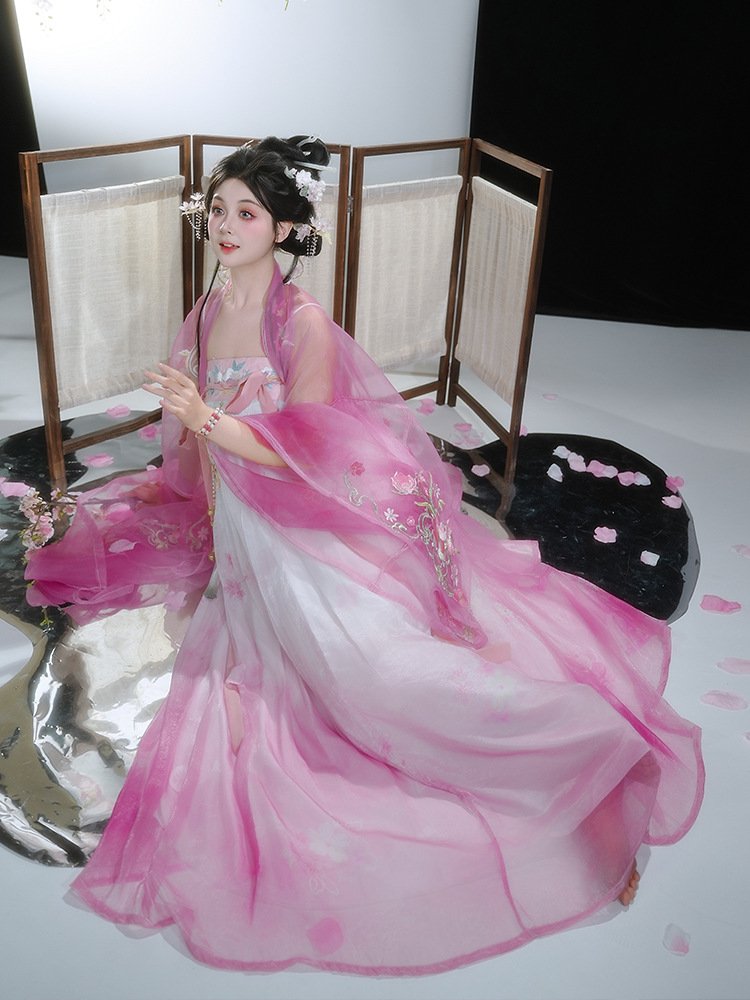
The dyeing technology of the Tang Dynasty was very advanced, with a wide variety of dyes and mature dyeing techniques. This allowed Tang Dynasty Hanfu to have bright, vivid, and long-lasting colors, creating a colorful sartorial world.
The dyes used in the Tang Dynasty were mainly natural dyes, divided into plant dyes and mineral dyes. Plant dyes were the most commonly used, including indigo (for blue), madder (for red), sophora japonica (for yellow), and pomegranate peel (for brown). These plant dyes were widely available and had good color fastness. Mineral dyes included cinnabar (for red), azurite (for blue), and malachite (for green), which were more expensive and mainly used for dyeing high-end silk fabrics.
The Tang Dynasty’s dyeing techniques were diverse, including dip dyeing, tie-dyeing, and batik. Dip dyeing was the most basic dyeing technique, in which the fabric was dipped into the dye solution to obtain a uniform color. Tie-dyeing was a technique in which the fabric was tied with threads before dyeing, creating a unique pattern of light and dark colors. Batik was a technique in which wax was applied to the fabric before dyeing, and the wax was removed after dyeing to reveal the white pattern on a colored background. These dyeing techniques were widely used in Tang Dynasty Hanfu, especially in commoners’ clothing, creating a variety of unique patterns.
The color of Tang Dynasty Hanfu was not only a matter of aesthetics but also reflected social hierarchy. As mentioned earlier, the color of official robes was strictly regulated, with yellow exclusive to the royal family, purple for high-ranking officials, and so on. This color hierarchy was an important part of the Tang Dynasty’s social order and was strictly enforced by the government.
3.3 Embroidery and Decoration Technology: The Artistic Expression of Tang Hanfu
Embroidery and decoration were important techniques that added artistic value to Tang Dynasty Hanfu. The Tang Dynasty’s embroidery technology was extremely exquisite, with a variety of stitches and rich patterns, making Hanfu more luxurious and beautiful.
3.3.1 Embroidery Technology: Exquisite and Vivid
Tang Dynasty embroidery was characterized by its fine stitches, vivid patterns, and rich colors. The main stitches included chain stitch, satin stitch, seed stitch, and split stitch. These stitches were flexible and could be used to embroider various patterns, from delicate flowers to vivid animals.
The patterns of Tang embroidery were diverse, integrating traditional Chinese motifs and foreign motifs. Traditional Chinese motifs included dragons, phoenixes, cranes, peonies, lotuses, and clouds, which symbolized auspiciousness, nobility, and longevity. Foreign motifs included Persian Sasanian patterns, Indian lotus patterns, and Central Asian animal motifs, which were introduced through cultural exchanges. For example, the “Sasanian-style phoenix” embroidery pattern combined the Chinese phoenix with Persian Sasanian decorative elements, showing a unique fusion style.
Embroidery was widely used in Tang Dynasty Hanfu, especially in noble women’s clothing. The cuffs, collars, hems, and sleeves of Ruqun and Beizi were often embroidered with exquisite patterns. Some noble women’s Hanfu was even fully embroidered, with the entire garment covered with delicate patterns, making it extremely luxurious. The embroidery on men’s official robes was mainly limited to the chest and back, with patterns such as cranes (for high-ranking officials) and magpies (for low-ranking officials), reflecting their social status.
3.3.2 Other Decoration Technologies: Gold-Plating, Appliqué, and Inlay
In addition to embroidery, Tang Dynasty Hanfu also used other decoration technologies such as gold-plating, appliqué, and inlay to enhance its luxury.
Gold-plating technology was used to add gold threads or gold foil to the fabric. Gold threads were woven into the fabric along with silk threads, creating a shiny effect. Gold foil was pasted on the fabric to form patterns. This technology was mainly used in noble women’s clothing and imperial robes, making the clothing more dazzling and luxurious. For example, the “crimson brocade robe with gold threads” unearthed from the tomb of a Tang nobleman was woven with gold threads and silk threads, with a bright red background and golden patterns, showing extremely high craftsmanship.
Appliqué was a technique in which colored fabric pieces were cut into patterns and sewn onto the garment. This technique was simple and effective, and was widely used in commoners’ clothing. The patterns of appliqué included flowers, animals, and geometric patterns, adding a touch of color to the plain fabric.
Inlay technology was used to inlay precious stones, pearls, or jade into the fabric or accessories. For example, hairpins and buckles were often inlaid with pearls or gemstones, while some noble women’s clothing was inlaid with small jade pieces along the cuffs and collars, enhancing the overall luxury of the clothing.
4. Cultural Connotations of Tang Dynasty Hanfu: The Spiritual Core of Tang Civilization
Tang Dynasty Hanfu was not just a form of clothing; it was a carrier of rich cultural connotations, reflecting the values, aesthetics, and social customs of the Tang Dynasty. Its cultural connotations were mainly manifested in openness and inclusiveness, hierarchy and etiquette, and humanism and aesthetic pursuit.
4.1 Openness and Inclusiveness: The Cultural Character of the Tang Dynasty
The most prominent cultural connotation of Tang Dynasty Hanfu was its openness and inclusiveness, which were the core characteristics of Tang civilization. The Tang Dynasty’s openness was reflected in its acceptance of foreign cultures and its willingness to absorb and integrate foreign elements into its own culture. This was fully embodied in the design, style, and decoration of Tang Hanfu.
As mentioned earlier, Tang Dynasty Hanfu absorbed a large number of elements from Hufu (Hu ethnic clothing), such as the round collar of the Yuanlingpao, the narrow sleeves of Hufu, and the tight-fitting design. These elements were not only adopted directly but also integrated with traditional Hanfu elements to form new styles. For example, the Yuanlingpao, which originated from Hufu, was improved by adding traditional Hanfu elements such as wide sleeves and embroidery patterns, becoming a unique style of Tang Hanfu. This integration showed that the Tang people did not reject foreign cultures but regarded them as a source of innovation, reflecting their open-minded cultural attitude.
The inclusiveness of Tang Dynasty Hanfu was also reflected in the integration of foreign decorative patterns. A large number of foreign motifs, such as Persian Sasanian patterns, Indian lotus patterns, and Central Asian animal motifs, appeared in the embroidery and printing patterns of Tang Hanfu. These motifs were not simply copied but were recreated and integrated with traditional Chinese motifs to form new patterns. For example, the “dragon and phoenix pattern with Sasanian style” combined the Chinese dragon and phoenix with Persian Sasanian spiral patterns, creating a unique artistic effect. This integration of foreign patterns not only enriched the aesthetic connotations of Tang Hanfu but also reflected the Tang Dynasty’s status as a cultural center of East Asia, attracting cultures from all over the world.
The openness of Tang Dynasty Hanfu was also reflected in women’s clothing. The low neckline, high-waisted skirt, and wide sleeves of women’s Ruqun broke the traditional concept of “modesty and covering” and showed the beauty of women’s bodies. This bold design was not only a manifestation of aesthetic innovation but also a reflection of the improved social status of women in the Tang Dynasty. In the Tang Dynasty, women had more freedom to participate in social activities such as riding, hunting, banquets, and even political affairs. Their clothing was designed to adapt to these activities, reflecting the respect for women’s individual needs and the openness of social concepts.
4.2 Hierarchy and Etiquette: The Social Order Reflected in Clothing
Although Tang Dynasty Hanfu was open and diverse, it still retained the traditional Chinese concept of hierarchy and etiquette, which was an important part of Confucian culture. The Tang government established a strict system of attire etiquette, which regulated the clothing of different social classes in terms of color, fabric, style, and decoration. This system played an important role in maintaining social order and strengthening imperial rule.
The hierarchical nature of Tang Hanfu was most clearly reflected in the color of official robes. As mentioned earlier, emperors wore yellow robes, first-rank to third-rank officials wore purple robes, fourth-rank and fifth-rank officials wore crimson robes, sixth-rank and seventh-rank officials wore green robes, eighth-rank and ninth-rank officials wore cyan robes, and commoners could only wear gray or white robes. This color hierarchy was strictly enforced, and violations were severely punished. For example, according to the “Tang Law,” commoners who wore yellow clothing would be sentenced to death, which showed the strictness of the attire system.
The hierarchical nature of Tang Hanfu was also reflected in the fabric and decoration. Emperors and nobles wore clothing made of fine silk such as brocade, satin, and velvet, decorated with precious materials such as gold threads, pearls, and jade. Officials’ clothing was made of high-quality silk, with embroidery patterns reflecting their official ranks. Commoners’ clothing was made of cotton or linen, with no elaborate decorations. This difference in fabric and decoration clearly distinguished the social status of different groups, reinforcing the hierarchical social order.
In addition to reflecting social hierarchy, Tang Hanfu also embodied traditional Chinese etiquette. For example, when attending formal occasions such as imperial banquets and religious ceremonies, people had to wear formal attire such as Yuanlingpao and Nishang Yuyi, and their hairstyles and accessories also had to conform to etiquette requirements. When meeting elders or superiors, people had to adjust their clothing to show respect. These etiquette requirements reflected the importance of Confucian “li” (ritual propriety) in the Tang Dynasty and played a role in regulating social behavior.
4.3 Humanism and Aesthetic Pursuit: The Reflection of Individual Value
Tang Dynasty Hanfu also reflected the humanistic spirit and aesthetic pursuit of the Tang people. The humanistic spirit emphasized the respect for individual needs and the pursuit of comfort and happiness, while the aesthetic pursuit focused on natural beauty, harmonious beauty, and diverse beauty.
The humanistic spirit of Tang Hanfu was reflected in its focus on comfort and practicality. Compared to the cumbersome and restrictive clothing of previous dynasties, Tang Hanfu was more comfortable and convenient. For example, the Yuanlingpao with narrow sleeves was convenient for riding and writing; the loose-fitting Beizi was comfortable to wear; and the high-waisted Ruqun was not only beautiful but also allowed for free movement. This focus on comfort and practicality showed that the Tang people paid more attention to individual needs and quality of life, reflecting the progress of humanistic consciousness.
The aesthetic pursuit of Tang Hanfu was reflected in its natural beauty and harmonious beauty. The Tang people loved nature, and this love was reflected in the patterns and colors of Hanfu. A large number of natural motifs such as flowers, birds, and landscapes appeared in the embroidery and printing patterns of Tang Hanfu, which were depicted in a vivid and realistic way. The colors of Tang Hanfu were bright and natural, such as the red of peonies, the green of lotus leaves, and the blue of the sky, creating a harmonious and beautiful visual effect. In addition, the overall design of Tang Hanfu pursued a balance between form and function, between decoration and simplicity, reflecting the traditional Chinese aesthetic concept of “harmony between man and nature.”
The aesthetic pursuit of Tang Hanfu was also reflected in its diversity. The Tang people had a tolerant attitude towards different styles of clothing, and various styles such as Ruqun, Beizi, Yuanlingpao, and Hufu coexisted and competed with each other. People could choose clothing styles according to their own preferences and needs, showing a diverse and personalized aesthetic trend. This diversity was a result of the Tang Dynasty’s open social atmosphere and reflected the Tang people’s broad aesthetic horizons.
5. The Inheritance and Influence of Tang Dynasty Hanfu: From Ancient to Modern
Tang Dynasty Hanfu not only occupied an important position in the history of Chinese traditional clothing but also had a profound impact on the clothing culture of subsequent dynasties and even neighboring countries. Its core elements and cultural connotations have been inherited and developed to this day, becoming an important part of Chinese cultural heritage.
5.1 The Inheritance of Tang Dynasty Hanfu in Subsequent Dynasties
After the Tang Dynasty, although Chinese society experienced changes such as wars and dynastic replacements, Tang Dynasty Hanfu’s core styles and craftsmanship were inherited by subsequent dynasties and continued to develop.
The Song Dynasty (960 CE – 1279 CE) inherited the basic styles of Tang Dynasty Hanfu but showed a more conservative and elegant aesthetic due to the influence of Neo-Confucianism. Women’s Ruqun in the Song Dynasty had a higher neckline and narrower sleeves compared to the Tang Dynasty, and the colors were more subdued. Men’s clothing still took the Yuanlingpao as the main style, but the fabric was more delicate and the decoration was more simple. However, the Song Dynasty also inherited the Tang Dynasty’s silk weaving and embroidery technologies, and even made some innovations. For example, the “Song brocade” produced in the Song Dynasty was more delicate and elegant than Tang brocade, with more complex patterns.
The Ming Dynasty (1368 CE – 1644 CE) advocated the restoration of Han culture and inherited the traditional elements of Tang Dynasty Hanfu. The Ming Dynasty’s Daopao inherited the loose-fitting style of Tang Dynasty Daopao, and the Ruqun inherited the high-waisted design of Tang Dynasty Ruqun. The Ming Dynasty also restored some of the Tang Dynasty’s attire etiquette, such as the color hierarchy of official robes. In addition, the Ming Dynasty’s silk weaving and dyeing technologies were further developed on the basis of the Tang Dynasty, with more varieties of fabrics and more vivid colors.
The Qing Dynasty (1644 CE – 1912 CE) implemented the “queue and clothing order,” forcing Han men to wear Manchu clothing, but Han women’s clothing still retained many elements of Tang Dynasty Hanfu. For example, the “Qipao” (cheongsam) of the Qing Dynasty evolved from the Tang Dynasty’s Ruqun, retaining the high-waisted design and delicate decoration. In addition, the folk clothing of the Qing Dynasty also inherited some styles of Tang Dynasty Hanfu, such as the Beizi and the round-collar jacket.
5.2 The Influence of Tang Dynasty Hanfu on Neighboring Countries
Tang Dynasty Hanfu had a profound influence on the clothing culture of neighboring countries such as Japan, Korea, and Vietnam, which was an important part of the spread of Tang culture.
Japan’s traditional clothing, the “Kimono,” was deeply influenced by Tang Dynasty Hanfu. During the Tang Dynasty, Japan sent a large number of envoys to China to study Chinese culture, including clothing culture. The Japanese envoys brought back Tang Dynasty Hanfu styles, fabrics, and craftsmanship, which were localized and developed into the Kimono. For example, the “Junihitoe” (twelve-layered robe) worn by Japanese noble women inherited the multi-layered design of Tang Dynasty Ruqun; the “Kosode” (short-sleeved robe) inherited the narrow-sleeve design of Tang Dynasty Hufu. In addition, Japan’s traditional hair ornaments and jewelry also absorbed elements of Tang Dynasty accessories.
Korea’s traditional clothing, the “Hanbok,” also inherited many elements of Tang Dynasty Hanfu. The Hanbok’s high-waisted skirt, wide sleeves, and cross-collar design were all influenced by Tang Dynasty Ruqun and Beizi. The colors of the Hanbok were also bright and diverse, which was similar to Tang Dynasty Hanfu. During the Silla period (57 BCE – 935 CE), Korea had frequent cultural exchanges with the Tang Dynasty, and a large number of Tang Dynasty silk fabrics and clothing patterns were introduced to Korea, promoting the development of Korea’s clothing culture.
Vietnam’s traditional clothing, the “Ao Dai,” also had traces of Tang Dynasty Hanfu’s influence. The Ao Dai’s tight-fitting upper garment and long skirt inherited the design of Tang Dynasty Ruqun, and the delicate embroidery patterns inherited the Tang Dynasty’s embroidery technology. Vietnam’s clothing culture was deeply influenced by Tang Dynasty culture during the Ly Dynasty (1009 CE – 1225 CE) and Tran Dynasty (1225 CE – 1400 CE), and many elements of Tang Dynasty Hanfu were integrated into Vietnam’s traditional clothing.
5.3 The Revival and Innovation of Tang Dynasty Hanfu in Modern Times
In modern times, with the rise of the Chinese cultural revival movement, Tang Dynasty Hanfu has once again entered public view, becoming a symbol of cultural identity and national pride. Young people in China are increasingly interested in Tang Dynasty Hanfu, and they wear it to participate in traditional festivals, cultural activities, and even daily life.
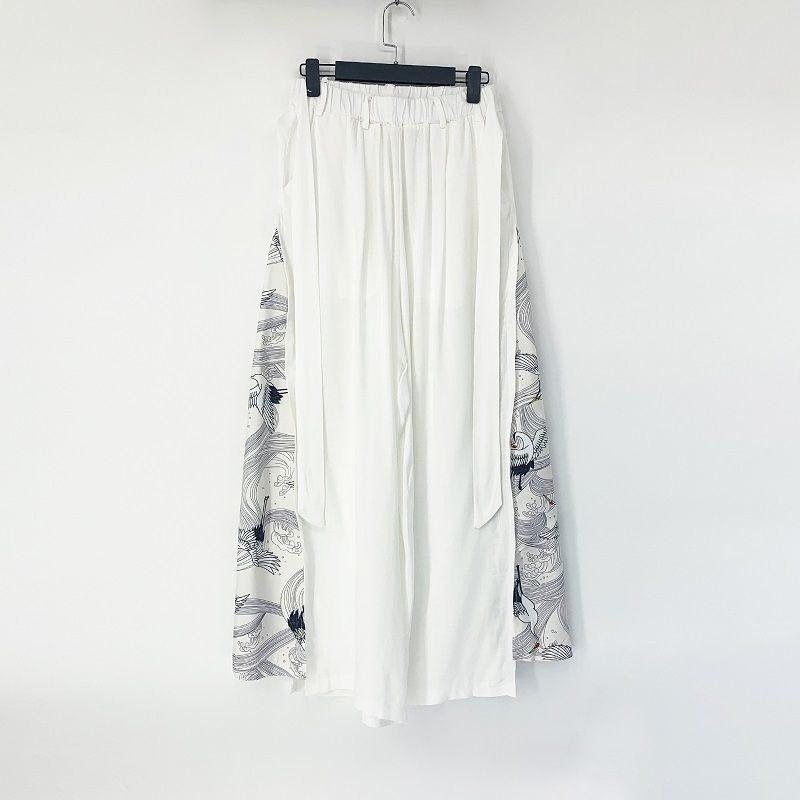
The modern revival of Tang Dynasty Hanfu is not a simple copy of ancient styles but a combination of traditional elements and modern design concepts. Modern designers extract core elements of Tang Dynasty Hanfu, such as the high-waisted Ruqun, round-collar Yuanlingpao, and delicate embroidery patterns, and integrate them with modern fabrics and cutting techniques to create new styles of Hanfu that are suitable for modern life. For example, modern Tang-style Ruqun uses lightweight and breathable fabrics such as cotton and linen, making it more comfortable to wear; the Yuanlingpao is designed with a shorter length and looser cut, making it suitable for daily commuting.
The modern revival of Tang Dynasty Hanfu has also promoted the inheritance and development of traditional craftsmanship. Many craftsmen have begun to restore and inherit Tang Dynasty silk weaving, dyeing, and embroidery technologies, and some traditional workshops have been established to produce high-quality Tang-style Hanfu. At the same time, universities and research institutions have also begun to study Tang Dynasty Hanfu culture, exploring its historical value and modern significance.
In addition, Tang Dynasty Hanfu has also become an important carrier for the spread of Chinese culture to the world. In recent years, Chinese cultural exchange activities held around the world often feature Tang Dynasty Hanfu performances, which showcase the beauty and cultural connotations of Tang Hanfu to the world. Many foreign people have also become interested in Tang Dynasty Hanfu, and some foreign designers have even incorporated Tang Hanfu elements into their works, promoting the international spread of Tang Hanfu culture.
6. Conclusion: Tang Dynasty Hanfu as a Living Legacy of Chinese Civilization
Tang Dynasty Hanfu, as a product of the prosperous Tang civilization, is not only a masterpiece of Chinese traditional clothing but also a living carrier of Chinese culture. Its diverse styles, exquisite craftsmanship, and rich cultural connotations reflect the Tang Dynasty’s economic prosperity, political stability, cultural openness, and social progress.
The core value of Tang Dynasty Hanfu lies in its integration of tradition and innovation, openness and inclusiveness. It inherited the essence of previous dynasties’ clothing culture, such as the ritual concepts of Confucianism and the aesthetic pursuit of natural beauty, while absorbing foreign cultural elements and innovating in styles, craftsmanship, and patterns. This integration and innovation made Tang Dynasty Hanfu reach an unprecedented peak in the history of Chinese traditional clothing and set a model for the development of clothing culture in subsequent dynasties.
The influence of Tang Dynasty Hanfu has transcended time and space. It has been inherited by subsequent dynasties and has had a profound impact on the clothing culture of neighboring countries, becoming an important part of East Asian clothing culture. In modern times, the revival and innovation of Tang Dynasty Hanfu