
Hanfu in the Han Dynasty: The Founding of Han Ethnic Costume Tradition and Its Cultural Essence
Introduction: Hanfu – The Material Carrier of a Great Dynasty’s Civilization
The Han Dynasty (202 BC – 220 AD), a pivotal era spanning over four centuries, laid the foundational framework for Han ethnic civilization. As the first unified and long-standing feudal dynasty ruled by the Han ethnicity after the Qin Dynasty’s brief unification, it not only established a centralized bureaucratic system and institutionalized Confucianism as the state ideology but also forged a distinctive costume culture – Hanfu. This costume system, specific to the Han Dynasty, differs from the broader concept of “Han ethnic traditional costumes” that evolved in subsequent dynasties; it represents the formative stage of Han costume aesthetics and ritual norms, embodying the dynasty’s political ideals, ethical values, and technological prowess.
The prosperity of Hanfu in the Han Dynasty was rooted in a confluence of social factors. Politically, the stable governance following the early “policy of recuperation” provided a solid foundation for cultural development. Economically, the textile industry flourished, with silk production centers in Shu (modern Sichuan) and Qi (modern Shandong) producing high-quality fabrics that supplied the costume market. Culturally, the ascendance of Confucianism infused Hanfu with strict hierarchical order and ethical connotations. From the emperor’s imperial robes adorned with the Twelve Imperial Emblems to the commoners’ plain linen garments, from noble women’s elegant quju (curved-front robes) to scholars’ austere shenyi (deep robes), every piece of Hanfu bore clear social markers and rich cultural meanings.
Archaeological discoveries have yielded invaluable tangible evidence for studying Han Dynasty Hanfu. Well-preserved silk fabrics and costumes unearthed from sites such as the Mawangdui Han Tombs in Changsha, the Mancheng Han Tombs in Hebei, and the Xiongnu tombs in Xinjiang have revealed the exquisite craftsmanship and diverse styles of the era. Complemented by historical texts including Records of the Grand Historian (Shiji), Book of Han (Hanshu), and Rites of Zhou (Zhouli), these artifacts enable us to reconstruct the grand tapestry of Hanfu culture. This article explores the historical evolution, core styles, craftsmanship, cultural connotations, classic relics, and contemporary inheritance of Hanfu in the Han Dynasty, aiming to unravel the profound connection between this costume system and the spiritual world of ancient Chinese civilization.
I. Historical Evolution of Hanfu in the Han Dynasty: From Simplicity to Grandeur
The development of Hanfu over the Han Dynasty’s 400-year history was closely intertwined with political changes, economic growth, and cultural shifts. It can be divided into three distinct stages: the Early Han (202 BC – 8 AD), marked by simplicity and inheritance; the Mid-Late Western Han (8 BC – 25 AD), characterized by prosperity and innovation; and the Eastern Han (25 AD – 220 AD), featuring diversification and localization. Each stage reflected the unique social atmosphere and aesthetic trends of its time.
1. Early Han: Simplicity and Inheritance (202 BC – 8 AD)
The Early Han emerged from the chaos of the Qin Dynasty’s collapse and the Chu-Han Contention. The ruling class, led by Emperor Gaozu Liu Bang, advocated frugality to restore national strength, a ethos that directly shaped Hanfu’s style. At this stage, Hanfu primarily inherited the costume traditions of the late Warring States Period and the Qin Dynasty, emphasizing practicality, solemnity, and modesty.
Politically, the early Han rulers initially embraced Huang-Lao Daoism’s philosophy of “inaction and frugality,” with Emperor Gaozu issuing edicts restricting luxurious attire. Book of Han·Treatise on Arts and Literature records: “In the early years of the Han, officials wore plain silk robes, and commoners clad themselves in linen; none dared to wear brocade or embroidered garments.” This frugality extended to imperial costumes: the emperor’s robes were crafted from plain yellow silk (yellow had not yet become an exclusive imperial color) with minimal cloud-patterned decorations, and imperial crowns were relatively unadorned compared to later periods.
In terms of style, the shenyi (deep robe) dominated as daily and ceremonial wear for both men and women. This one-piece garment integrated the upper coat and lower skirt, featuring a cross-collar (tied to the right, a marker of “civilized” Han etiquette) and wide sleeves, with the hem reaching the ankles. For men, the shenyi was cinched at the waist with a silk sash, and officials hung jade pendants to signify status. Women’s shenyi had a slimmer cut, with narrow embroidered borders adorning collars and cuffs.
Archaeological evidence corroborates this simplicity. Silk robes from Mawangdui Han Tomb No. 2 (dated to the early Western Han) are predominantly plain white or light-colored, with only cuffs and collars decorated with simple cloud and geometric patterns. Linen garments from commoners’ tombs in Shandong are even more austere, with loose cuts suited for labor and no decorative elements.
2. Mid-Late Western Han: Prosperity and Innovation (8 BC – 25 AD)
From Emperor Wu’s reign onward, the Han Dynasty entered an era of unprecedented prosperity. The opening of the Silk Road facilitated the exchange of textiles and craftsmanship with the Western Regions; domestic textile production, particularly Shu Brocade and Qi silk, reached new heights; and the institutionalization of Confucianism solidified a stricter hierarchical costume system. These factors collectively propelled Hanfu toward prosperity and innovation.
A key transformation was the diversification of styles and decorations. While the shenyi remained popular, new styles emerged, including the quju (curved-front robe) and zhiju (straight-front robe). The quju, a women’s style, featured a curved front that wrapped around the body, with overlapping hems and a tightly tied waist, creating a slim, elegant silhouette. This design was both aesthetic and practical, as the overlapping layers provided warmth in cold weather. The zhiju, by contrast, had a straight front without overlapping, offering greater convenience for daily activities and gradually replacing the quju in the Eastern Han.
Imperial and official costumes became increasingly luxurious and hierarchical. Emperor Wu officially designated yellow as the imperial color, and imperial robes were embroidered with the Twelve Imperial Emblems (sun, moon, stars, mountains, dragons, phoenixes, algae, fire, ritual vessels, grains, ax, and fu) – a tradition inherited from pre-Qin dynasties, symbolizing the emperor’s supreme authority. Official costumes adopted a color-coded rank system: first to third rank wore purple, fourth to sixth crimson, and seventh to ninth green. The jade pendant system was also refined, with pendant shape and material varying by rank.
Textile innovation drove the enrichment of fabrics and patterns. High-end silk fabrics such as damask (zoujin), brocade (jin), and gauze (sha) gained popularity. Shu Brocade, renowned for its intricate patterns and vivid colors, served as imperial tribute and diplomatic gifts to the Western Regions. Patterns evolved from simple geometrics to elaborate motifs, including cloud patterns, dragon-phoenix combinations, and auspicious animals (tigers, deer, cranes). These patterns carried symbolic meaning: dragons represented imperial power, phoenixes auspiciousness, and deer longevity.
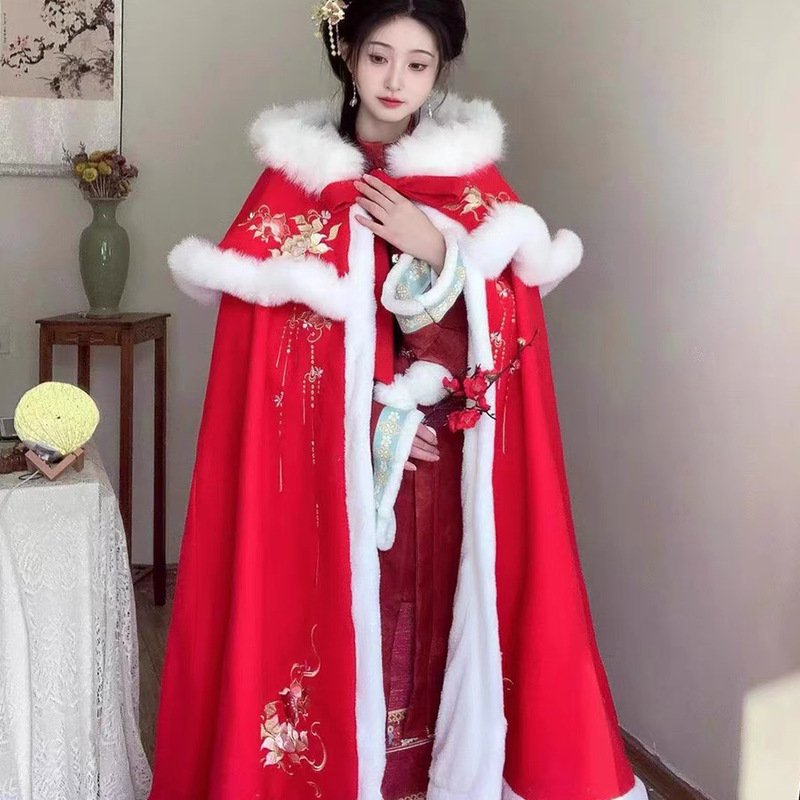
Cultural exchange with the Western Regions introduced new elements. Cotton, imported from Central Asia, expanded material options; “Hu hats” (from ethnic minorities in the Western Regions) became fashionable among scholars and officials, even worn by the emperor for hunting. Costumes from Xinjiang’s Xiongnu tombs, such as Han-style silk robes adorned with Western Region patterns, exemplify this cultural fusion.
3. Eastern Han: Diversification and Localization (25 AD – 220 AD)
After the Wang Mang Interregnum, the Eastern Han inherited Western Han costume traditions but developed new trends of diversification and localization. The political center’s shift from Chang’an to Luoyang shifted the economic and cultural hub eastward, fostering regional variations in Hanfu. Additionally, the rise of local powerful families and the spread of Taoism influenced aesthetic preferences.
In style, the zhiju fully replaced the quju as the dominant women’s costume, with a simpler, more elegant cut. Men’s wear saw the emergence of “short coat and trousers” (duanyi ku), a practical ensemble of knee-length short coat and wide-legged trousers, suitable for labor and military activities. Initially worn by commoners and soldiers, this style later gained popularity among scholars for leisure.
The hierarchical system was further refined. The Eastern Han court issued detailed regulations specifying styles, colors, and decorations for each social class. Imperial robes added “sea-water and cliff” (haishuiyan) patterns at the hem, symbolizing the emperor’s dominion over land and sea. A prototype of the later rank badge system emerged: small square patches embroidered with birds (for civil officials) or beasts (for military officials) were sewn onto official robes, making ranks instantly distinguishable.
Regional variations became more pronounced. Central Plains costumes (Luoyang, Kaifeng) were solemn and elegant, adhering to court norms; southern styles (Jiangnan, Hunan) were lighter and more colorful, with elaborate embroidery; northern costumes (Hebei, Shanxi) were thicker and more practical, adapted to cold climates. Costumes from Nanyang, Henan (Eastern Han tombs) reflect Central Plains austerity – dark-colored shenyi with simple cloud patterns – while those from Guangzhou tombs feature bright colors and intricate floral designs, embodying southern vibrancy.
Taoism’s influence manifested in more naturalistic styles. Scholars and Taoists wore loose linen robes with no decorations, tying their hair with simple wooden pins instead of jade. This “return to nature” aesthetic contrasted with noble luxury, reflecting the diversification of social tastes.
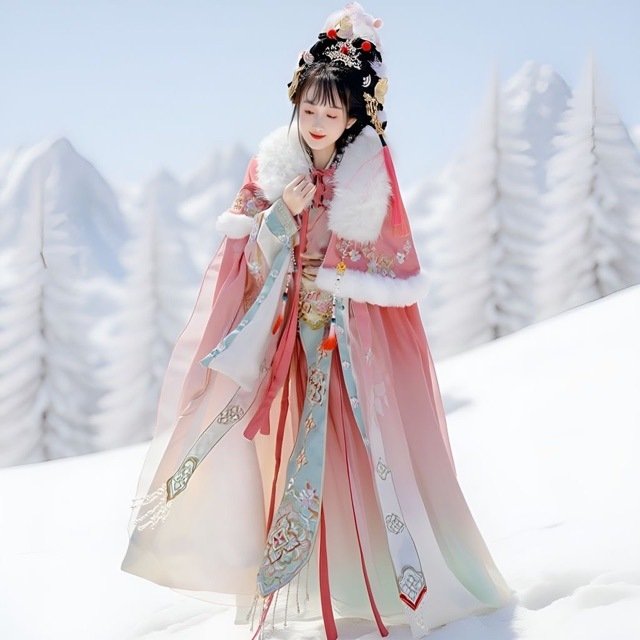
II. Core Styles of Hanfu in the Han Dynasty: Hierarchy and Practicality
The Hanfu system of the Han Dynasty was comprehensive, covering all social classes and occasions. Based on wearers’ identities and scenarios, it can be categorized into three main types: ceremonial costumes (for imperial rituals and official ceremonies), daily costumes (for routine activities), and special costumes (for military, labor, and mourning). Each category blended hierarchical symbolism with practical functionality, reflecting the dynasty’s social structure and lifestyle.
1. Ceremonial Costumes: Symbols of Hierarchy and Ritual
Ceremonial costumes were the most solemn and hierarchically distinct type of Hanfu, worn for imperial sacrifices, coronations, court audiences, and weddings. Regulated by Confucian ritual norms, they featured strict differences in style, color, and decoration to denote social status.
a. Imperial Ceremonial Costume: The Apex of Authority
The emperor’s ceremonial costume, or chaofu (court dress), was the most luxurious and symbolic garment of the era. A long shenyi crafted from high-quality yellow silk (imperial exclusive after Emperor Wu), it was embroidered with the Twelve Imperial Emblems arranged in a precise order: sun, moon, and stars on the back (symbolizing imperial illumination of the world); mountains, dragons, and phoenixes on the front (representing stability and auspiciousness); and algae, fire, ritual vessels, grains, ax, and fu on the lower hem (embodying virtue, power, and concern for the people).
Accessories completed the ensemble: the liuhe guan (six-direction crown) of jade and silk, with six horizontal beams symbolizing unification of the six cardinal directions; jade pendants; and silk sashes. The pendants produced a clear, rhythmic sound as the emperor walked, reminding him to maintain dignity and steady gait – a tangible expression of “ritual in movement.”
This costume was not merely ornamental but a tool of political legitimacy. Rites of Zhou·Yinfu states: “The Twelve Emblems on the imperial robe distinguish the emperor from his subjects, clarifying hierarchy and preventing overstepping.” Every detail – from color to embroidery – reinforced the emperor’s supreme status as the “Son of Heaven.”
b. Official Ceremonial Costume: Rank in Color and Decoration
Official ceremonial costumes, worn for court audiences and sacrifices, followed strict hierarchical rules. The base style was a cross-collar, wide-sleeved shenyi, but color, fabric, and accessories varied by rank. The color system – purple (1st–3rd rank), crimson (4th–6th), and green (7th–9th) – became a classic marker of Chinese official costume hierarchy, inherited by later dynasties.
Fabric quality also denoted rank: first-rank officials wore brocade embroidered with cloud and dragon motifs; second to third rank wore damask with cloud patterns; fourth to sixth rank plain silk; and seventh to ninth rank silk-linen blends. Accessories included jade pendants (white jade for high ranks, green jade or agate for low ranks) and official seals, whose materials (gold, silver, bronze) mirrored rank.
The Eastern Han introduced a prototype rank badge system: small square patches sewn to the robe front, embroidered with birds (civil officials) or beasts (military officials). First-rank civil officials wore crane motifs (symbolizing integrity and longevity), while first-rank military officials wore lions (representing courage). This innovation made ranks instantly recognizable, strengthening bureaucratic order.
c. Noble Women’s Ceremonial Costume: Elegance and Decorum
Noble women’s ceremonial costumes, worn for weddings and imperial banquets, centered on the quju and shenyi. The quju, the most iconic style, featured a curved front wrapping around the body, a tightly tied waist, and wide embroidered borders at the hem. Fabrics included high-quality silk and brocade, with colors restricted to red, purple, and green (bright hues reserved for nobility).
Accessories were exquisite: fengguan (phoenix crowns) of gold inlaid with pearls and jade, symbolizing noble status; silk sashes adorned with jade pendants; and earrings and necklaces of agate and amber. A fengguan unearthed from a Western Han noble tomb in Nanjing features two gold phoenixes inlaid with rubies and sapphires, weighing over 500 grams – a testament to noble wealth and craftsmanship.
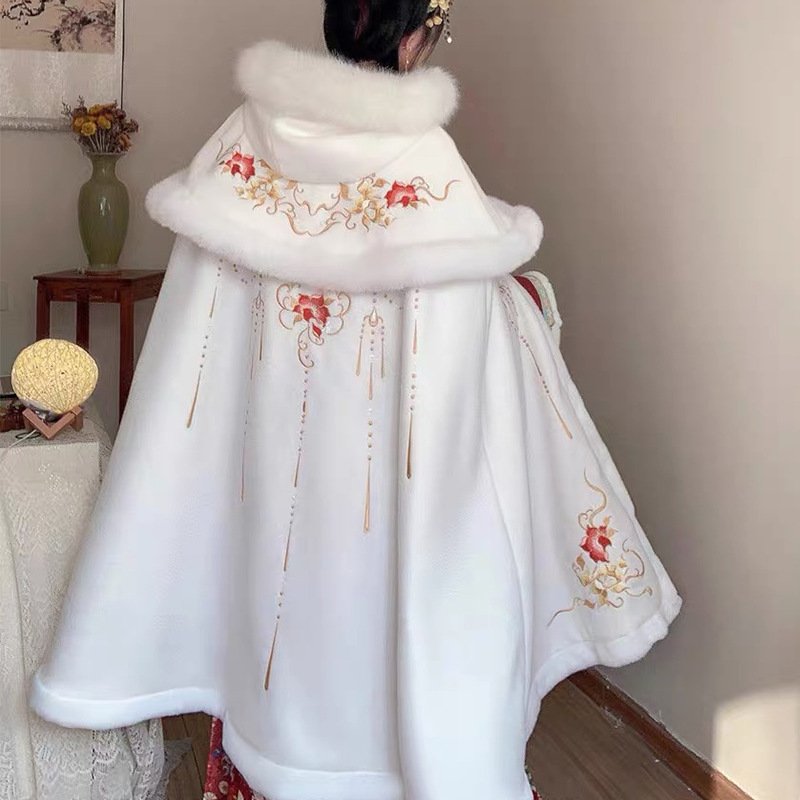
2. Daily Costumes: Practicality and Aesthetics
Daily costumes prioritized comfort and functionality while reflecting social status and personal taste. More diverse than ceremonial wear, they varied by gender, age, and occupation.
a. Men’s Daily Costumes: Shenyi, Short Coats, and Trousers
The shenyi remained the staple for nobles, scholars, and officials in daily life. Nobles and scholars wore silk versions with narrower sleeves and looser cuts for convenience; commoners opted for linen. Scholars often tied silk sashes with small jade pendants or inkstone bags, signifying their cultural identity.
Commoners, soldiers, and craftsmen favored “short coat and trousers” (duanyi ku). The knee-length, short-sleeved cross-collar coat was crafted from linen or coarse silk, paired with wide-legged trousers for ease of movement. In cold weather, a thick cotton or fur jacket was added. This practical ensemble dominated working-class wardrobes.
A distinctive men’s accessory was the dai gou (belt hook), made of bronze or jade to fasten trousers or sashes. Noble men’s belt hooks were inlaid with gold and jade, while commoners used plain bronze – a small but telling status marker.
b. Women’s Daily Costumes: Quju, Zhiju, and Aoqun
Women’s daily wear was more diverse, with quju, zhiju, and aoqun (jacket and skirt) as main styles. The quju, popular in the Western Han, featured a curved front and slim cut, flattering for all ages. The zhiju, emerging in the late Western Han and dominant in the Eastern Han, had a straight front and looser fit, ideal for household chores.
The aoqun – a short jacket (ao) paired with a skirt (qun) – was favored by young women and commoners. The short-sleeved, cross-collar ao was worn over a pleated skirt tied at the waist. Young women chose bright hues (pink, light green), while married women preferred more muted tones. Skirts were often printed with floral or avian motifs, reflecting women’s aesthetic sensibilities.
Accessories included hairpins, combs, earrings, and bracelets. Noble women wore multiple gold and jade hairpins; commoners used wooden or bamboo versions. Combs, often carved with simple patterns, served both functional and decorative purposes. Earrings were typically jade or silver rings or pendants.
3. Special Costumes: Adapted to Specific Needs
Special costumes were designed for military, labor, and mourning, with styles and materials tailored to specific functions.
Military costumes (bingfu) prioritized protection and mobility. They included iron helmets (kui) with face brims, scale or leather armor (jia) covering the chest, back, and arms, and thick linen short coats and trousers dyed black or dark red (to conceal bloodstains). Han military armor was advanced for its time, contributing to the dynasty’s military success against the Xiongnu.
Mourning costumes (sifu) adhered strictly to Confucian ritual, following the “five grades of mourning” (wufu system). The highest grade (dacui) was coarse linen with uncut edges, worn by immediate relatives for three years. Colors were limited to white (the traditional mourning hue), with no decorations. This system made filial piety tangible through clothing, reinforcing Confucian family ethics.
Labor costumes for farmers and craftsmen were even simpler than daily wear, crafted from coarse linen or hemp. Farmers wore patched short coats and trousers with straw hats for sun and rain protection. Craftsmen opted for tight-fitting short coats to avoid interfering with work. Durability and affordability were key priorities.
III. Craftsmanship and Material Aesthetics of Hanfu in the Han Dynasty
The brilliance of Hanfu lay not only in its hierarchical system and diverse styles but also in its exquisite craftsmanship and advanced materials. The Han Dynasty represented a golden age of Chinese textile production, with innovations in weaving, embroidery, dyeing, and pattern design elevating costume aesthetics. High-quality materials paired with superb craftsmanship made Hanfu a pinnacle of traditional Chinese handicraft.
1. Textile Materials: The Foundation of Hanfu Aesthetics
Textile quality directly determined Hanfu’s appearance and status. The Han Dynasty boasted a rich array of fabrics, including silk, linen, cotton, and fur, with regional specialties driving material diversity.
a. Silk: The Noble Fabric
Silk, the most prestigious Hanfu material, symbolized wealth and status. The Han silk industry was highly developed, with major production centers in Shu (Sichuan), Qi (Shandong), and the Central Plains. Varieties included plain silk (pingsi), damask (zoujin), brocade (jin), gauze (sha), and silk velvet (rongsi), each with unique properties.
Plain silk, smooth with subtle luster, was used for nobles’ daily shenyi. Damask, with raised patterns, adorned official robes and women’s quju. Brocade, the most luxurious, was woven with gold and silver threads to create intricate, luminous designs. Shu Brocade’s “five-color brocade” (wucai jin) – using five thread hues to weave dragons, phoenixes, and animals – was renowned as imperial tribute.
Gauze, light and breathable, was ideal for summer wear. The “plain gauze robe” from Mawangdui Han Tomb No. 1 exemplifies Han gauze craftsmanship: 1.28 meters long with a 1.90-meter sleeve span, it weighs a mere 49 grams, thin enough to fold into a matchbox. Its warp density of 58 threads per centimeter and weft density of 40 threads per centimeter reflect unparalleled spinning technology.
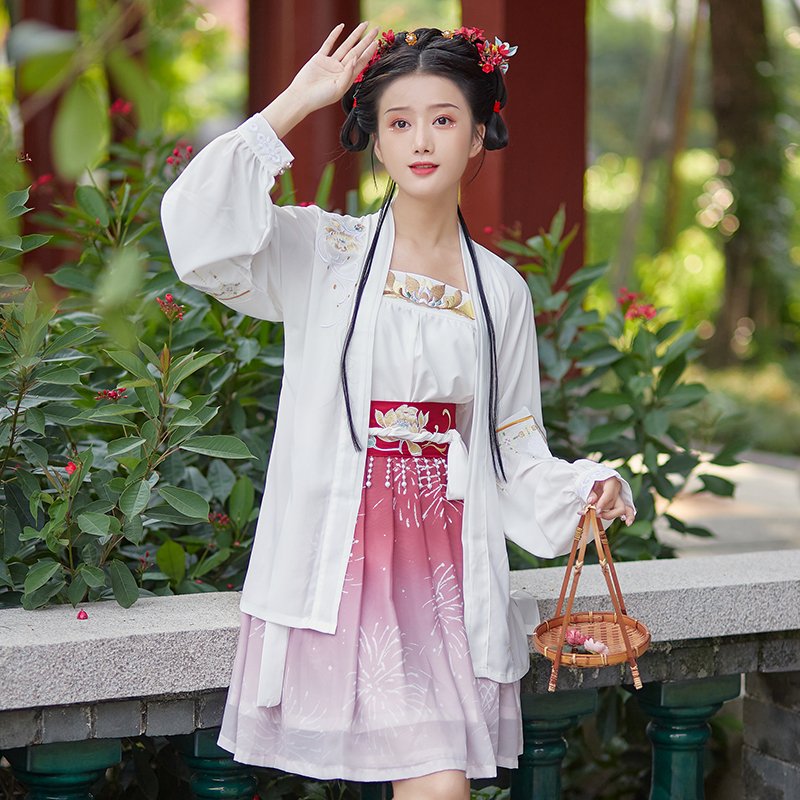
b. Linen: The Commoner’s Staple
Linen, cheap and durable, was the primary material for commoners’ Hanfu. Major production centers in Shandong, Hebei, and Henan produced linen of varying grades: fine linen for daily wear, coarse hemp for labor and mourning costumes.
Han linen weaving was advanced. High-grade linen from Shandong tombs has a warp density of 30 threads per centimeter and weft density of 25 threads per centimeter, comparable to modern linen. Commoners’ linen garments were dyed gray or brown (affordable natural dyes) and occasionally printed with simple patterns for decoration.
c. Other Materials: Cotton, Fur, and Blends
Cotton, introduced from the Western Regions during the Han Dynasty, was initially used in the northwest before spreading to the Central Plains in the Eastern Han. Soft and warm, it was ideal for winter wear. Cotton garments from Xinjiang’s Xiongnu tombs are China’s earliest surviving cotton clothing, featuring simple cuts and plain colors.
Fur was used for winter warmth, especially in northern regions. Nobles wore fox or sable fur-lined silk coats; commoners used sheepskin or dog skin. Fur was typically lined inside silk or linen for comfort.
Blended fabrics, such as silk-linen and silk-cotton, emerged to combine material advantages. Silk-linen blends were durable and breathable (spring/autumn wear), while silk-cotton blends were warm and soft (winter wear).
2. Embroidery and Decoration: The Art of Needle and Thread
Embroidery was a key decorative technique, enhancing Hanfu’s aesthetic value and symbolizing status. Han embroidery inherited Warring States and Qin traditions while developing regional styles like Shu Embroidery and Qi Embroidery, applied to garments from imperial robes to commoners’ aoqun.
a. Imperial and Noble Embroidery: Luxury and Symbolism
Imperial and noble Hanfu featured exquisite embroidery, with gold and silver thread work dominating. Flat gold (gold foil wrapped around silk) and coiled gold (gold wire coiled around silk) created three-dimensional, luminous effects. Dragon motifs on imperial robes used coiled gold for bodies and flat gold for scales, rendering dragons lifelike and majestic.
The Twelve Imperial Emblems combined silk and gold threads: sun and moon with silver and gold, stars with small pearls, mountains and algae with green and blue silk. Noble women’s quju featured phoenix and peony motifs in bright hues, with intricate stitching.
Cloud patterns, the most common imperial/noble motif, used gradient silk threads to create flowing, ethereal effects. Symbolizing the emperor’s connection to heaven, they embodied the “unity of man and nature” (tianren heyi) philosophy.
b. Folk Embroidery: Simplicity and Vitality
Folk embroidery, though less luxurious, was vibrant and regionally distinctive. Shu Embroidery (Sichuan) featured delicate stitches and vivid animal motifs on women’s aoqun. Qi Embroidery (Shandong) used bold colors and simple geometrics for men’s sashes and skirt borders.
Folk motifs drew from daily life and auspicious beliefs: peonies (wealth), lotus and fish (fertility and abundance), deer (longevity), and butterflies (joy). Techniques included flat stitch, chain stitch, and seed stitch, with decorations concentrated on collars and cuffs to conserve thread. A linen ao from a Jiangsu Han tomb has a butterfly cuff motif in red and green silk, reflecting folk artisans’ creativity.
3. Dyeing Technology: Natural Colors and Durability
Hanfu’s rich, long-lasting colors relied on advanced natural dyeing. Han dyers used mineral and plant dyes, mastering gradient and tie-dye techniques to create diverse hues.
Mineral dyes – cinnabar (red), azurite (blue), malachite (green) – were used for noble garments, offering vivid, fade-resistant colors. Cinnabar-dyed red silk from Mawangdui remains bright after 2,000 years. Plant dyes – indigo (blue), safflower (red), gardenia (yellow), mulberry bark (brown) – were affordable for commoners.
Dyers mastered color mixing to create intermediates: indigo + safflower = purple, gardenia + indigo = green, safflower + gardenia = orange. Gradient dyeing (yunran) simulated sky hues on imperial robe hems; tie-dyeing (jiaoxuan) created irregular patterns on folk garments. Mordants like alum and iron ensured color fastness, as evidenced by well-preserved tomb garments.
IV. Cultural Connotations of Hanfu in the Han Dynasty: Ethics, Aesthetics, and Identity
Hanfu was more than mere clothing; it was a complex cultural carrier embodying the dynasty’s ethical norms, aesthetic ideals, and social identities. Every detail – from hierarchical regulations to decorative motifs – reflected core values of traditional Chinese culture, particularly Confucianism, shaping how individuals were perceived and how society functioned.
1. Confucian Ethics: Hierarchy and Ritual in Hanfu
Confucianism, institutionalized as state ideology under Emperor Wu, profoundly shaped Hanfu culture. Its core principles of li (ritual) and yi (righteousness) structured the Hanfu system, using clothing to maintain social order and ethical norms.
Strict hierarchy was a direct expression of Confucian li. Rites of Zhou states: “Clothing distinguishes high and low, clarifying superior and inferior, and honoring ritual.” This was enforced through regulations: imperial yellow robes and Twelve Emblems, official color-coded robes, and commoners’ plain linen. Violations were punished severely – a Western Han commoner wearing purple could face hard labor.
Confucian modesty and decorum shaped Hanfu styles. High collars and long sleeves covered skin; the cross-collar tied to the right (youren) marked “civilized” Han identity (left-tied collars were deemed “barbaric”). Women’s quju featured overlapping fronts to cover the torso, and wide sleeves concealing hands – embodying Confucian ideals of female virtue.
Confucian filial piety was encoded in the mourning costume system. The wufu system specified garment style and wearing duration by kinship: three years for parents (highest grade), shorter periods for distant relatives. This tangible expression of filial piety reinforced Confucian family ethics.
2. Aesthetic Concepts: Unity of Form and Meaning
Hanfu aesthetics pursued xingyi heyi (unity of form and meaning), where style and decoration combined visual beauty with symbolic significance, rooted in the “unity of man and nature” philosophy.
Form emphasized elegance and harmony. The shenyi’s one-piece design integrated upper (heaven) and lower (earth) garments, symbolizing cosmic unity. Wide sleeves and straight hems created a dignified silhouette, reflecting Confucian zhongyong (moderation). Color搭配 was harmonious: imperial warm hues (yellow, red) for majesty, literati cool tones (blue, green) for elegance.
Meaning was encoded in colors and motifs. Yellow symbolized imperial authority (post-Emperor Wu); purple, nobility; red, joy (weddings); white, mourning; green, youth. Motifs carried layered significance: the Twelve Imperial Emblems embodied imperial virtues; dragons, imperial power; phoenixes, auspiciousness; pine/bamboo/plum (Eastern Han), integrity.
Cloud patterns epitomized xingyi heyi: flowing lines created visual beauty, while symbolizing celestial connection. Dragon-phoenix motifs represented imperial-empress harmony; fish-lotus combinations, fertility. These motifs transformed Hanfu into a medium for cultural ideals.
3. Social Identity: Hanfu as a Visual Marker
Hanfu served as a “visual identity card,” instantly signaling social status, occupation, and culture. Distinct styles distinguished groups, reinforcing social structure.
Imperial and official Hanfu broadcast power: yellow robes and Twelve Emblems for emperors, color-coded robes and rank badges for officials. Civil officials’ avian motifs denoted literary refinement; military officials’ beast motifs, martial valor.
Scholars’ Hanfu reflected cultural identity: plain silk shenyi with narrow embroidery, silk sashes, and jade pendants. The Eastern Han scholar Guo Tai’s “square scarf” became a symbol of scholarly status after his death.
Merchants, despite wealth, faced restrictions: early Han regulations barred silk and bright colors, confining them to linen. By the mid-Western Han, wealthy merchants secretly wore silk, reflecting tensions between traditional “four-class” (scholar-farmer-craftsman-merchant) hierarchy and economic reality.
Commoners’ Hanfu signaled labor identity: short coats, wide trousers, and coarse linen. Rural women’s dark, minimally decorated garments reflected frugality and hard work.
4. Cultural Exchange: Hanfu as a Bridge on the Silk Road
The Silk Road facilitated costume cultural exchange, with Hanfu absorbing Western Region elements while spreading Han civilization abroad.
Western Region influences included styles and materials: “Hu hats” (brimmed hats) gained popularity among scholars and hunters; tight “Hu trousers” replaced wide-legged styles for soldiers, enhancing mobility. Cotton imports enriched winter wear options.
Hanfu’s influence on the Western Regions was profound. Han-style silk robes were prized by Central Asian nobles; Shu Brocade and embroidery techniques spread westward. Xinjiang’s Xiongnu tombs contain Han-style silk robes with Western motifs, evidence of fusion. Han’s hierarchical costume system inspired Central Asian states to adopt color-coded official ranks.
This exchange enriched Hanfu diversity and promoted Han civilization’s spread, laying groundwork for the East Asian “Sinic cultural circle.”
V. Classic Hanfu Relics and Their Cultural Significance
Han Dynasty tombs have yielded numerous well-preserved Hanfu relics, masterpieces of craftsmanship that illuminate cultural history. Below are four iconic examples and their significance.
1. Plain Gauze Robe (Mawangdui Han Tomb No. 1, Western Han)
Unearthed in 1972, this robe is a pinnacle of Han silk weaving. Measuring 1.28 meters long with a 1.90-meter sleeve span, it weighs a mere 49 grams, foldable into a matchbox. Crafted from plain gauze with a cross-collar and wide sleeves, it was Lady Xin Zhui’s (wife of a Western Han marquis) summer wear.
Technically, it represents unmatched spinning skill: 58 warp threads and 40 weft threads per centimeter, with silk thread fineness of 11.3 deniers (comparable to modern high-end silk). The plain weave technique creates exceptional lightness and breathability, still difficult to replicate.
Culturally, it reflects Western Han silk industry prosperity and early frugality. Its lack of decoration aligns with early Han austerity, while its craftsmanship demonstrates advanced textile technology. Preserved in Hunan Museum, it is a “national treasure of Chinese silk.”
2. Golden Thread Embroidered Dragon Robe Fragment (Mancheng Han Tomb, Western Han)
Discovered in 1968 in Liu Sheng’s (Prince Jing of Zhongshan) tomb, this 30×20 cm fragment is a masterpiece of imperial-level embroidery. Crafted from red brocade, it features a dragon motif embroidered with gold and silk threads.
Technically, it showcases mid-Western Han embroidery and brocade excellence. The brocade base weaves red and gold threads for luster; the dragon uses coiled gold for the body and flat gold for scales (three stitches per scale for dimension). Black silk thread embroiders lifelike eyes.
Culturally, it embodies hierarchical norms: Liu Sheng’s four-clawed dragon (five-clawed exclusive to emperors) signifies princely status. Golden thread reflects royal wealth. Preserved in Hebei Museum, it confirms the Western Han imperial costume system.
3. Quju Silk Robe (Mawangdui Han Tomb No. 1, Western Han)
This 1.42-meter-long robe with a 1.95-meter sleeve span is a classic of Western Han women’s Hanfu. Crafted from red plain silk with a curved front, its collar, cuffs, and hem feature dark blue cloud-patterned embroidery.
Its defining quju style – curved front wrapping twice around the body, tightly tied waist – creates a slim silhouette. The design balances aesthetics and function: overlapping layers provide warmth, and the adjustable fit suits various body types.
Culturally, it reflects noble women’s status and tastes. Red symbolizes nobility and auspiciousness; cloud patterns, celestial connection. As Lady Xin Zhui’s ceremonial wear, it demonstrates mature Western Han women’s costume design and noble social standing.
4. Linen Aoqun (Shandong Han Tomb, Eastern Han)
Unearthed in 2005 from a commoner’s tomb, this set includes a 70 cm gray linen ao (short coat) and 90 cm pleated linen skirt with printed floral patterns. The ao has short sleeves and a cross-collar; the skirt features simple pleats.
Technically, it reflects folk textile capabilities. The linen’s 30 warp and 25 weft threads per centimeter show refined weaving; printed floral patterns demonstrate folk dyeing and printing skill.
Culturally, it embodies Eastern Han commoners’ lives. Gray dye (affordable mulberry bark) and simple decoration align with working-class frugality. The aoqun style’s practicality suits household labor, while floral prints reveal commoners’ aesthetic aspirations. It provides rare insight into non-elite costume culture.
VI. Contemporary Inheritance of Hanfu: Reviving a Cultural Legacy
In recent decades, Hanfu has experienced a revival in China, with young people embracing it as a symbol of cultural identity. This resurgence reflects growing national cultural confidence and a desire to reconnect with traditional roots.
Hanfu clubs and events proliferate across universities and cities. Festivals like the Dragon Boat Festival and Mid-Autumn Festival see people wearing Hanfu to participate in rituals, performances, and parades. Social media platforms feature Hanfu influencers sharing styling tips and cultural knowledge, reaching millions of followers.
Designers blend Hanfu elements with modern fashion: cheongsams incorporating quju curved fronts, suits with shenyi cross-collars, and accessories reinterpreting jade pendants and hairpins. Luxury brands have collaborated with Hanfu artisans, showcasing pieces at international fashion weeks and elevating Hanfu’s global profile.
Educational initiatives promote Hanfu culture: museums host Hanfu-themed exhibitions and workshops; schools integrate Hanfu history into cultural curricula. Archaeological advancements, such as digital reconstruction of Mawangdui robes, enable more accurate reproductions and public engagement.
This revival is not mere nostalgia but a dynamic adaptation. Contemporary Hanfu balances tradition and modernity, making ancient aesthetics relevant to 21st-century life. It serves as a bridge between past and present, reminding people of Hanfu’s role as a carrier of Chinese ethics, aesthetics, and identity.
Conclusion: Hanfu – A Living Legacy of Han Civilization
Hanfu in the Han Dynasty represents the formative stage of Han ethnic costume tradition, embodying the dynasty’s political order, ethical values, aesthetic ideals, and technological prowess. From the simplicity of early Han linen to the grandeur of mid-Western Han brocade, from imperial Twelve Emblems to folk floral prints, every thread weaves a story of a civilization’s evolution.
Its cultural connotations – Confucian hierarchy and modesty, “unity of man and nature” aesthetics, social identity marking, and Silk Road exchange – reflect the core of traditional Chinese culture. Classic relics like the Mawangdui plain gauze robe and Mancheng golden thread fragment are not just artifacts but windows into the Han Dynasty’s spiritual world.
Today’s Hanfu revival testifies to its enduring vitality. As contemporary designers and enthusiasts reinterpret Hanfu for modern life, they breathe new life into an ancient tradition. Hanfu’s journey – from Han Dynasty court to 21st-century streets – confirms its status as a living legacy, carrying Chinese culture forward through every stitch.